
Europe
Belgium travel guide
Belgium is small and well connected by train, so you can see several cities from one base. Flanders in the north speaks Dutch, Wallonia in the south speaks French, and Brussels is officially both.
Belgium at a glance
- Currency
- Euro (EUR, €). Cards and contactless are accepted almost everywhere, though a few market stalls and small bakeries still prefer cash.
- Language
- Dutch (Flemish). English is widely spoken in shops, hotels and restaurants. A 'dank u' for thank you goes down well.
- Plugs
- Type C and E, 230 V. Bring an adapter if you're coming from the UK or North America.
- Emergency number
- 112
- Entry
- Belgium is in the Schengen Area and the EU. Visitors from many countries can stay up to 90 days in any 180 without a visa; check the rules for your passport before you travel.
- Getting around
- SNCB/NMBS trains link Bruges with Ghent, Brussels, Antwerp and the coast. Check belgiantrain.be for times and fares.
City guides for Belgium
Belgium
Bruges
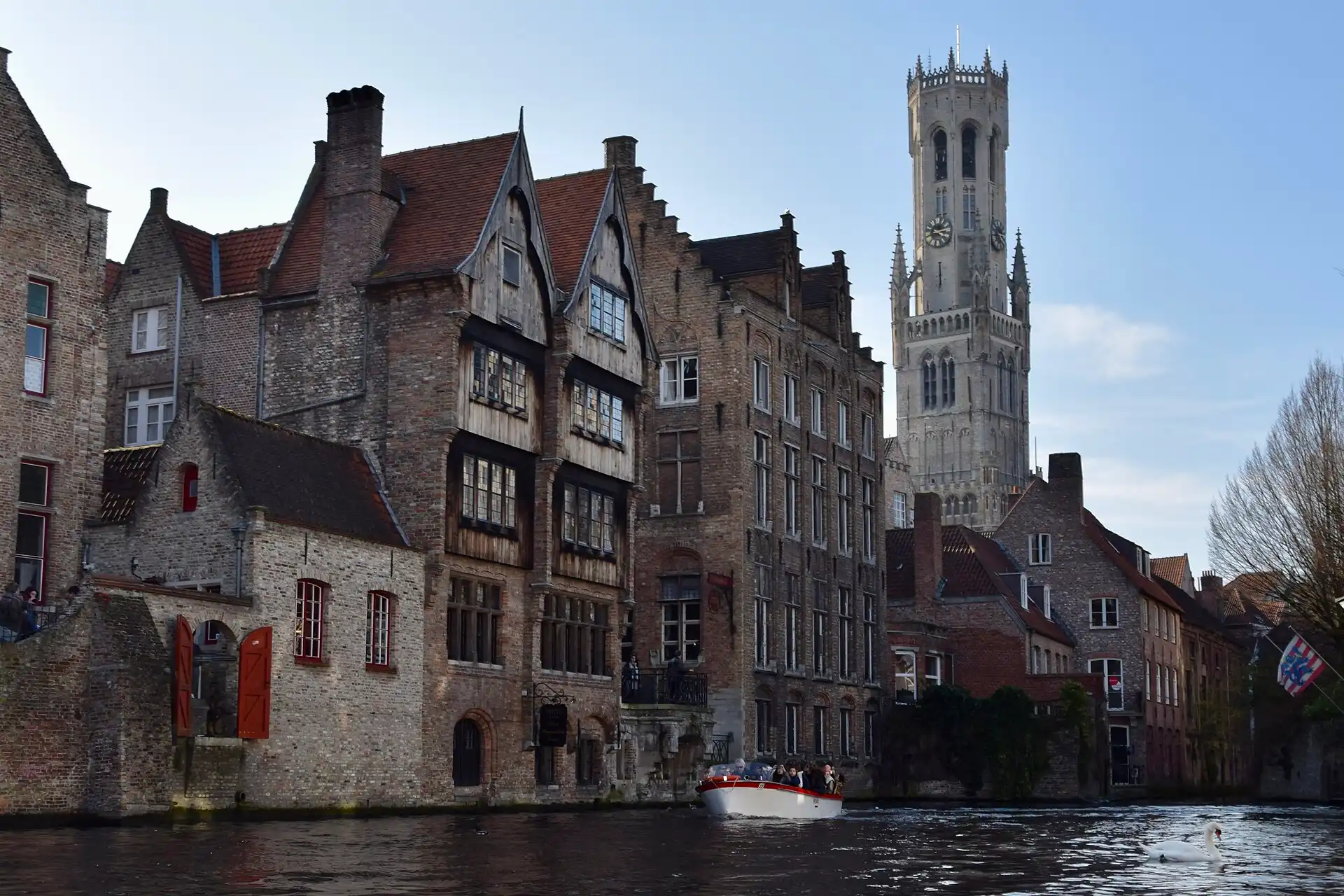
Canals, a belfry with 366 steps and a medieval centre small enough to cross on foot in twenty minutes.
Explore Bruges →
Belgium
Ghent
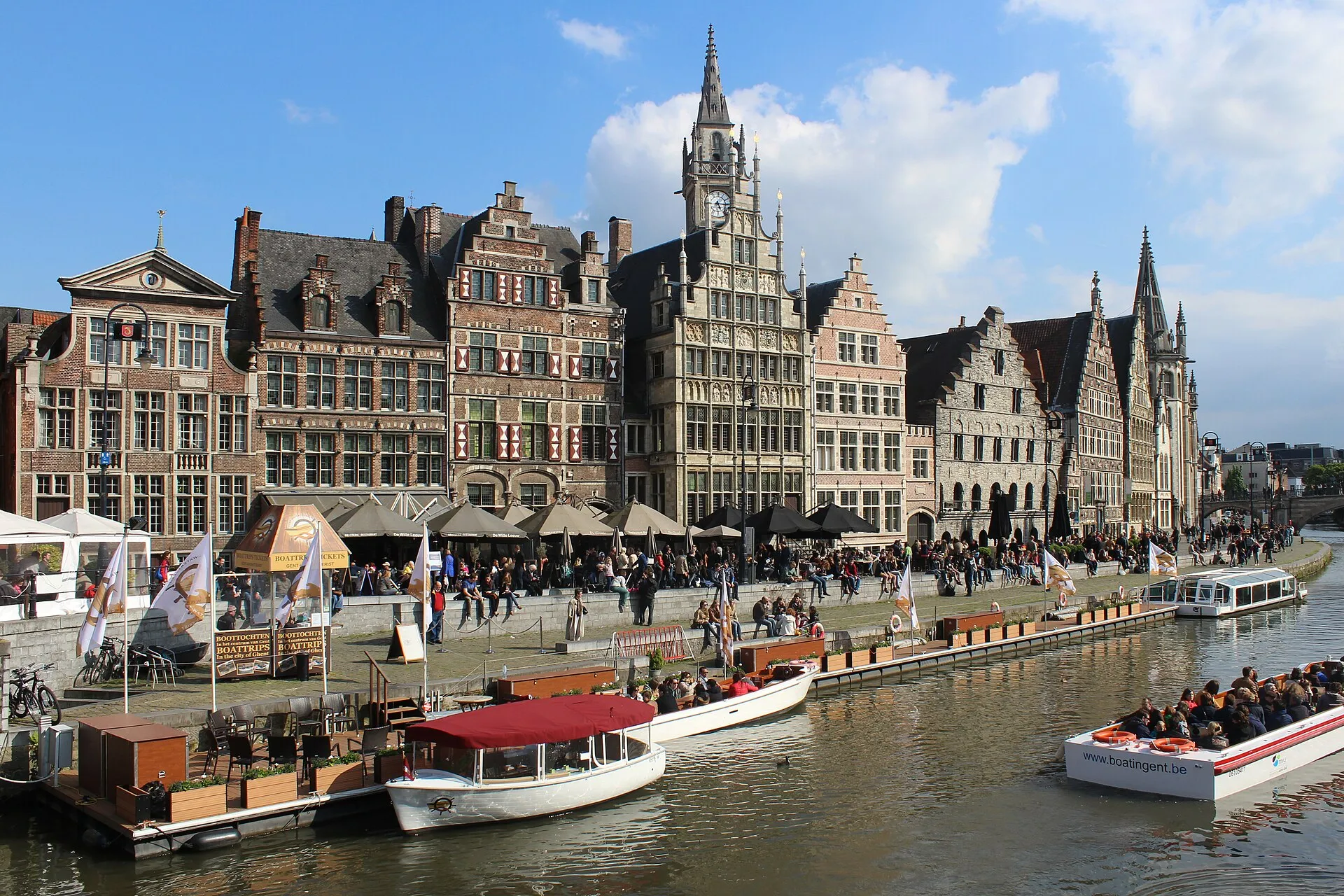
A castle in the middle of town, three towers in a row and the most famous altarpiece in Belgium.
Explore Ghent →
Belgium
Brussels
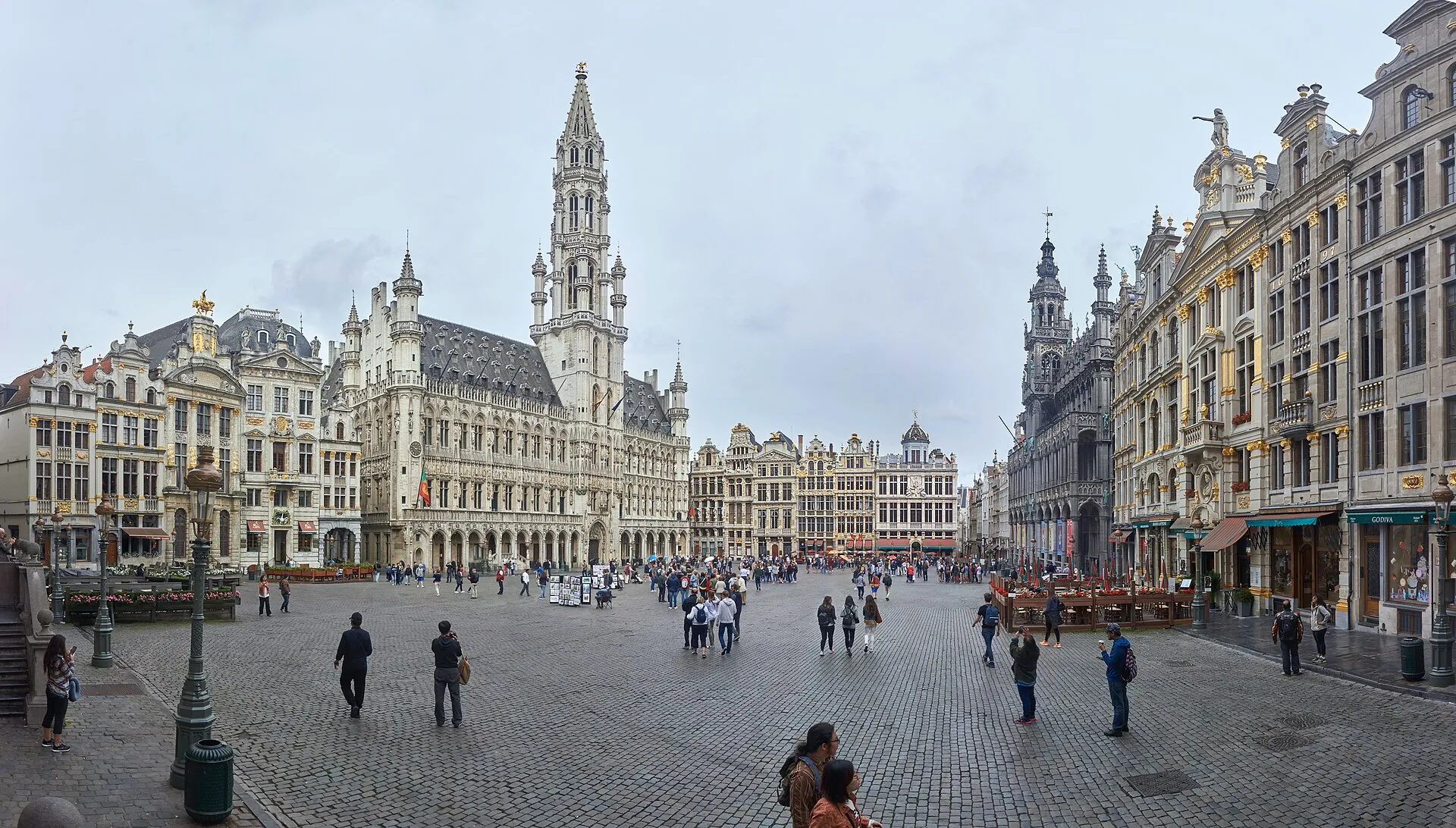
A gilded Grand-Place, a very small statue with a very big wardrobe, comic-strip walls, waffles and a giant atom.
Explore Brussels →
Bruges
Bruges was one of the richest trading cities in northern Europe in the Middle Ages, then its link to the sea silted up and the money left. That's the reason the centre still looks the way it does: nobody could afford to tear it down. The whole old town is a UNESCO World Heritage site, ringed by canals and a green rampart path. It's small, it's busy in the middle of the day, and it gets very quiet once the day-trippers catch their trains home. Two days is enough for the main sights, three if you want Ghent or the coast as well. Prices in this guide were checked on official sites on 3 November 2026.
If you only have one day in Bruges
- The Markt: The main square, with the Belfry on one side and a row of colourful step-gabled houses on the other. The statue in the middle shows Jan Breydel and Pieter de Coninck, the two Bruges men who led the revolt that ended in the Battle of the Golden Spurs in 1302.
- The Belfry (Belfort): The tower that defines the Bruges skyline. You climb 366 steps, passing the old treasury and the huge drum that drives the carillon, and the top gives you the whole town and, on a clear day, the coast.
- Burg square and the City Hall (Stadhuis): The second square, a minute from the Markt, and the older centre of power. The Gothic City Hall has a painted Gothic Hall upstairs with a wooden vaulted ceiling, and the square around it mixes several centuries of buildings.
- Canal boat trip and the Rozenhoedkaai: Bruges from the water is the view on all the postcards, and a boat is the easiest way to see the back sides of the old houses. The Rozenhoedkaai, where the Dijver meets the Groenerei, is the spot most people photograph.
- The Begijnhof and Minnewater: The Begijnhof is a walled courtyard of white houses around a lawn of trees, founded in the 13th century for beguines, religious women who lived together without taking full vows. Benedictine sisters live there now. Just beyond is the Minnewater, the old lake with its swans.
- Best time to go
- April to June and September are the easiest months. Summer weekends are packed. From 20 November 2026 to 3 January 2027 the Christmas markets run on the Markt and Simon Stevinplein, and the town is busy again.
- From the airport
- Trains run from Brussels Airport-Zaventem station, under the terminal, to Brugge station. Most trips involve a change in Brussels or Ghent, though some run direct. A Standard Ticket already includes the Brussels Airport Supplement; check times and the fare on belgiantrain.be.
Ghent
Ghent is a university city in Flanders, half an hour by train from Brussels or Bruges. It’s a working city, with students and bikes everywhere, but the medieval centre is close to perfect. A 12th-century castle sits beside the river, guild houses line the Graslei and three church towers stand in a row along one street. In the cathedral hangs the Ghent Altarpiece by the Van Eyck brothers. Plan one or two days. From 3 December 2026 to 3 January 2027, the Winterfeesten bring a Christmas market to the centre.
If you only have one day in Ghent
- St Bavo’s Cathedral and the Ghent Altarpiece: The cathedral is free, but the reason to come is the Adoration of the Mystic Lamb, the altarpiece by Hubert and Jan van Eyck, finished in 1432. One of its panels, the Just Judges, was stolen in 1934 and has never been found; the one you see is a copy.
- Belfry of Ghent: The 14th-century bell tower that held the city’s charters and watched for fire. A gilded dragon has stood on top since 1377. Inside you climb past old bells to a walkway with a view over the roofs; there’s a lift for part of the way.
- St Michael’s Bridge: Stand on the bridge and look east: St Nicholas’ Church, the Belfry and St Bavo’s Cathedral line up one behind the other. It’s the best free view in the city.
- Graslei and Korenlei: Two quays facing each other across the Leie, lined with guild and merchants’ houses. This was Ghent’s medieval port. Today it’s where the whole city sits by the water when the sun’s out.
- Gravensteen (Castle of the Counts): A real moated castle in the middle of town. An inscription over the gate says Count Philip of Alsace built it in 1180. You walk through the gatehouse, along the walls and into the keep; the audio guide is included and it’s funny.
- Patershol: A maze of narrow medieval lanes behind the castle. It was a run-down quarter for a long time and is now full of small restaurants. Come for dinner, or just wander in the late afternoon.
- Vrijdagmarkt and the Dulle Griet: A big square with a statue of Jacob van Artevelde, the 14th-century leader who sided with England in the wool trade. Round the corner, by the river, sits the Dulle Griet, a huge red 15th-century cannon.
- Werregarenstraat (Graffiti Street): A narrow alley near the town hall where graffiti is allowed. The walls change all the time, so what you see won’t be what anyone else saw.
- Best time to go
- April to June and September for walking. In December the Winterfeesten run from 3 December 2026 to 3 January 2027. July has the Gentse Feesten, a ten-day street festival.
- From the airport
- Take the train from Brussels Airport to Gent-Sint-Pieters (usually with a change in Brussels), then tram 1 to the centre. Check times and fares with the Belgian railways (SNCB/NMBS).
Brussels
Brussels doesn’t try hard to impress, and then you walk into the Grand-Place and it does anyway. The centre is compact: the square, the glass-roofed royal galleries, the cathedral and the famous little Manneken Pis are all a few minutes apart, and comic-strip murals pop up on the walls in between. Add the Magritte Museum, chocolate shops on the Sablon and the Atomium out in the north, and two days fill up fast. The Winter Wonders Christmas market runs from 27 November 2026 to 3 January 2027, from the Grand-Place to Place Sainte-Catherine.
If you only have one day in Brussels
- Grand-Place: One of the most beautiful squares in Europe and a UNESCO World Heritage site. The Gothic Town Hall from the 15th century faces a row of richly decorated guild houses, most of them rebuilt in stone after the French bombarded the city in 1695.
- Galeries Royales Saint-Hubert: A glass-roofed shopping arcade from 1847, one of the oldest in Europe, with chocolate shops, cafés, a cinema and a theatre under the arches.
- Manneken Pis: The little bronze boy peeing into a fountain has been Brussels’ mascot for centuries. He’s smaller than people expect, and he’s often dressed up: he has more than a thousand costumes, and some of them are on show in a small museum nearby.
- Sainte-Catherine and the old harbour: The square around the church of Sainte-Catherine was once Brussels’ harbour. The basins were filled in, but the street names (Quai aux Briques, Quai au Bois à Brûler) still tell you what was unloaded here, and it’s the best area in town for fish and seafood.
- Cathedral of St Michael and St Gudula: The Gothic cathedral with two white towers is named after the two patron saints of Brussels. It took about 300 years to build, and it’s where Belgian royal weddings and state funerals take place.
- Mont des Arts: A formal garden on the slope between the Upper and Lower Town, laid out for the 1958 World’s Fair. From the top of the steps you look over the garden to the Town Hall spire.
- Magritte Museum: Part of the Royal Museums of Fine Arts, the museum has the world’s largest collection of works by René Magritte, Belgium’s great surrealist: bowler hats, floating apples and pipes that aren’t pipes.
- Sablon: An elegant square with chocolate shops, antique dealers and the Gothic church of Notre-Dame du Sablon. Across the street, the small Petit Sablon garden has 48 bronze statues representing the old guilds.
- Best time to go
- April to June and September for mild weather. Late November to early January for Winter Wonders and the Christmas lights on the Grand-Place. It rains in every season, so pack a jacket.
- From the airport
- The STIB airport bus to the city costs €7.90 when you tap a contactless card (Airport2City fare, STIB, checked 17 November 2026). Trains from the airport station under the terminal reach Brussels-Central in about 15–20 minutes; the airport supplement is included in a standard ticket.
Belgium travel FAQ
Which city in Belgium should I visit first?
Bruges: Canals, a belfry with 366 steps and a medieval centre small enough to cross on foot in twenty minutes. Ghent: A castle in the middle of town, three towers in a row and the most famous altarpiece in Belgium. Brussels: A gilded Grand-Place, a very small statue with a very big wardrobe, comic-strip walls, waffles and a giant atom.
What currency does Belgium use?
The euro (EUR). Cards and contactless payment are accepted almost everywhere.
Which plugs does Belgium use?
Type C and E, 230 V. Bring an adapter if you're coming from the UK or North America.
Travelling to Belgium?
Heads-up: this page contains affiliate links. If you book or buy through them we may earn a small commission at no extra cost to you. It never changes our picks. How we make money.