
South America
Colombia travel guide
Colombia sits in the north-west of South America, with coasts on both the Caribbean and the Pacific. Most visitors combine Cartagena on the Caribbean with Bogotá, Medellín or the coffee region in the Andes.
Colombia at a glance
- Currency
- Colombian peso (COP). Cards work in hotels and most restaurants; carry some cash for taxis, street food and small shops.
- Language
- Spanish. English is spoken in many hotels and tour companies, less in shops and taxis.
- Plugs
- Type A and B, 110 V, as in the US. Visitors from Europe and the UK need an adapter.
- Emergency number
- 123
- Entry
- Visitors from many countries, including the EU, the UK and the US, can enter without a visa for up to 90 days. Migración Colombia’s online Check-MIG form is a free pre-registration that can speed up border control. Check the rules for your passport before you travel.
- Getting around
- Distances are big and the mountains are steep, so most visitors fly between cities; domestic flights are frequent and often cheap. Long-distance buses link the rest.
City guides for Colombia
Cartagena
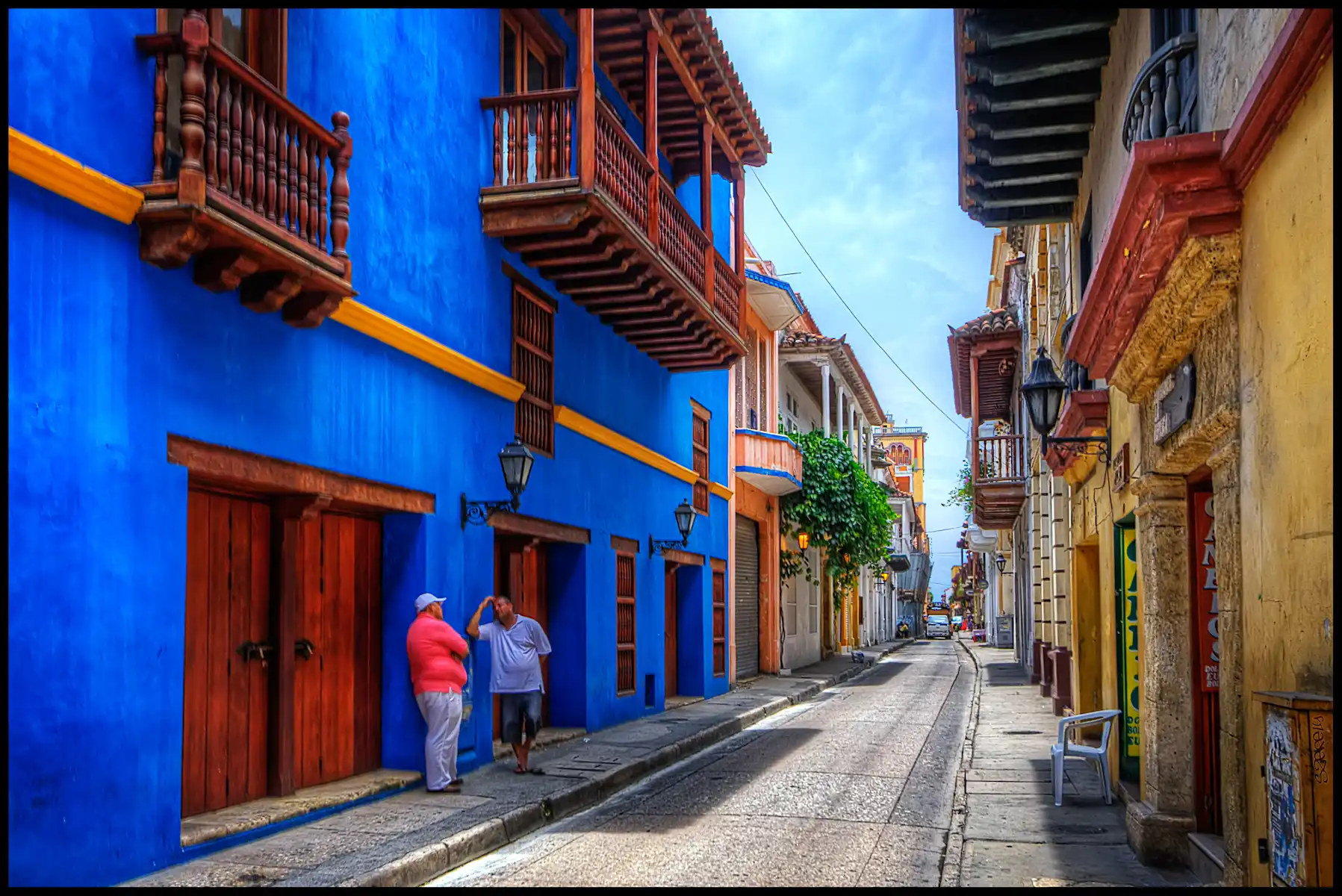
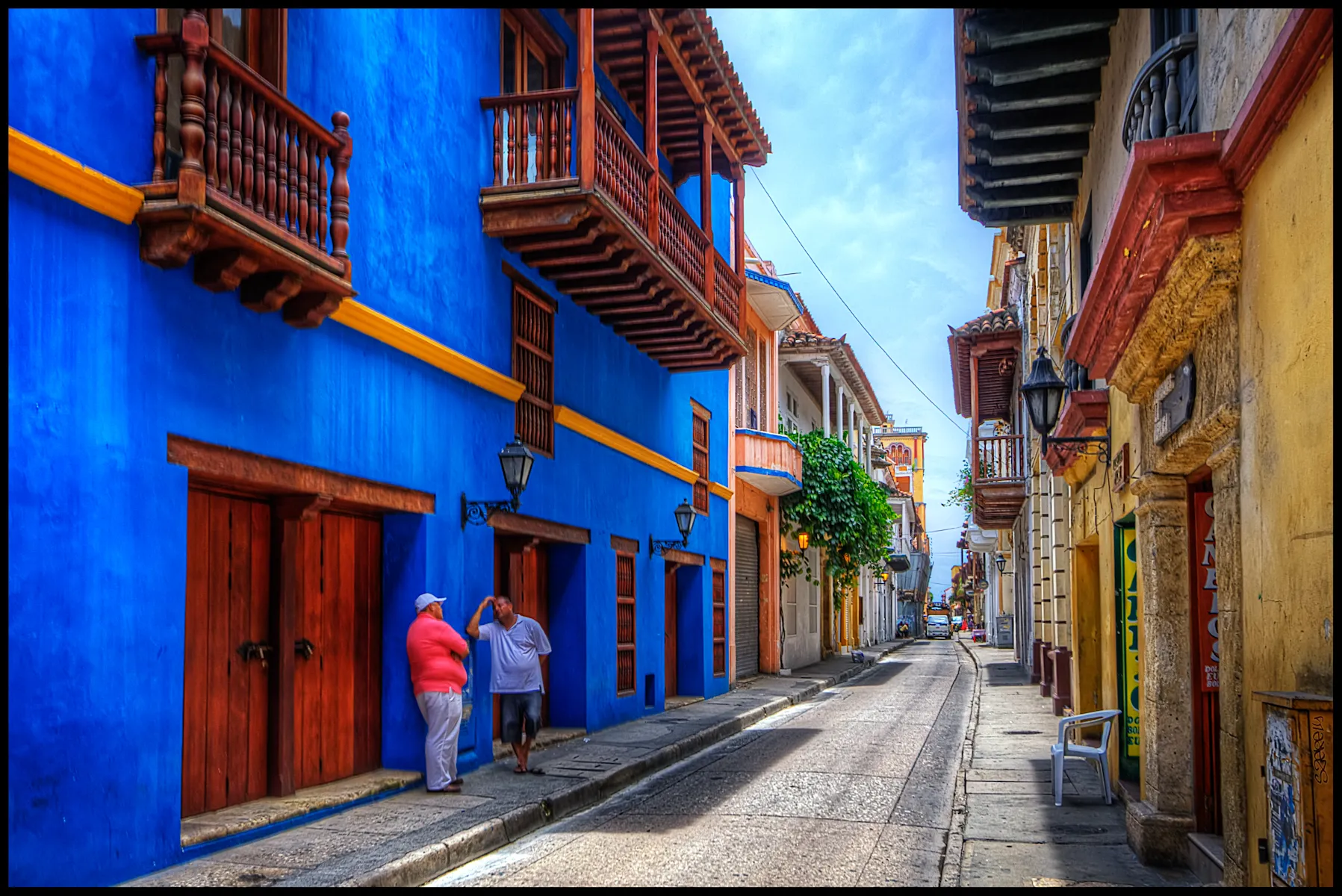
Cartagena de Indias, on Colombia’s Caribbean coast, was founded in 1533 and grew rich as a Spanish port. That’s why it’s ringed by walls and forts. Inside the walls, the old town is a grid of squares, churches and painted houses with wooden balconies. Getsemaní, just outside, is livelier, with street art and bars. It’s hot and humid all year, so walk early and late and rest at midday. December to April is the dry season and the busiest time, with winter sun when Europe and North America are cold. Two or three days covers the city, plus a boat to the islands.
If you only have one day in Cartagena
- Walled city and the Clock Tower: The Clock Tower gate, the Puerta del Reloj, is the main way into the old town. It was once called the Boca del Puente, after a drawbridge over the canal that used to run here. Through it, the Plaza de los Coches opens up. In the 17th century, enslaved Africans were sold around this square; today the arcade on one side is the Portal de los Dulces, lined with sweet stalls.
- Plaza de Santo Domingo and Botero’s Gertrudis: A busy square in front of the Santo Domingo church, full of café tables in the evening. The reclining bronze woman is Gertrudis, by the Colombian artist Fernando Botero. Her shiny patches show where people touch her for luck.
- Palace of the Inquisition and Plaza de Bolívar: The Spanish Inquisition set up its tribunal in Cartagena in 1610. Its baroque palace on the Plaza de Bolívar was finished in 1770, and sentences were read out on the square in front. It’s now the city’s history museum. The square itself is shady and a good place to sit.
- Zenú Gold Museum (Museo del Oro Zenú): A small museum on the Plaza de Bolívar, run by Colombia’s central bank, with gold and clay work by the Zenú people of the Caribbean plains. The labels are in Spanish and English, and it’s air-conditioned.
- Church and Museum of San Pedro Claver: Peter Claver was a Spanish Jesuit who spent about 40 years caring for enslaved Africans arriving in Cartagena. He died here in 1654 and was made a saint in 1888. His remains lie under the altar of the church, and the old Jesuit cloister next door is now a museum.
- The city walls at sunset: Thick stone walls still wrap around most of the old town. You can walk along the top for long stretches, with the Caribbean on one side and the rooftops on the other. The bastion of Santo Domingo, on the sea side, is the classic sunset spot.
- Getsemaní: The old working-class district outside the walls, now known for murals on almost every street. In the evening the Plaza de la Trinidad, in front of its church, fills with street food, music and people.
- Castillo San Felipe de Barajas: The big fortress on the San Lázaro hill, named after Philip IV of Spain and built by enslaved Africans under Spanish command. It was expanded several times. In 1741 it held out against the British admiral Edward Vernon’s attack. Inside, you can walk through a maze of tunnels and up to the top for the view over the old town.
- Best time to go
- December to April, the dry season, though it’s also the busiest and priciest. October and November are the wettest months.
- From the airport
- Take a taxi from the official rank; the ride to the old town is around 15 minutes. Taxis charge fixed fares by zone rather than by meter, so confirm the price before you get in.
Colombia travel FAQ
How many days do I need in Cartagena?
Two days for the walled city, Getsemaní and San Felipe, plus a third for the Rosario Islands.
What currency does Colombia use?
The Colombian peso (COP). Cards work in hotels and restaurants, but carry cash for taxis and small purchases.
Which plugs does Colombia use?
Type A and B, 110 V, the same as the US and Canada. Visitors from Europe and the UK need an adapter.
Do I need a visa for Colombia?
Not if you come from the EU, the UK, the US or many other countries, for stays of up to 90 days. Check the current rules for your passport.
Travelling to Colombia?
Heads-up: this page contains affiliate links. If you book or buy through them we may earn a small commission at no extra cost to you. It never changes our picks. How we make money.