
Europe
Croatia travel guide
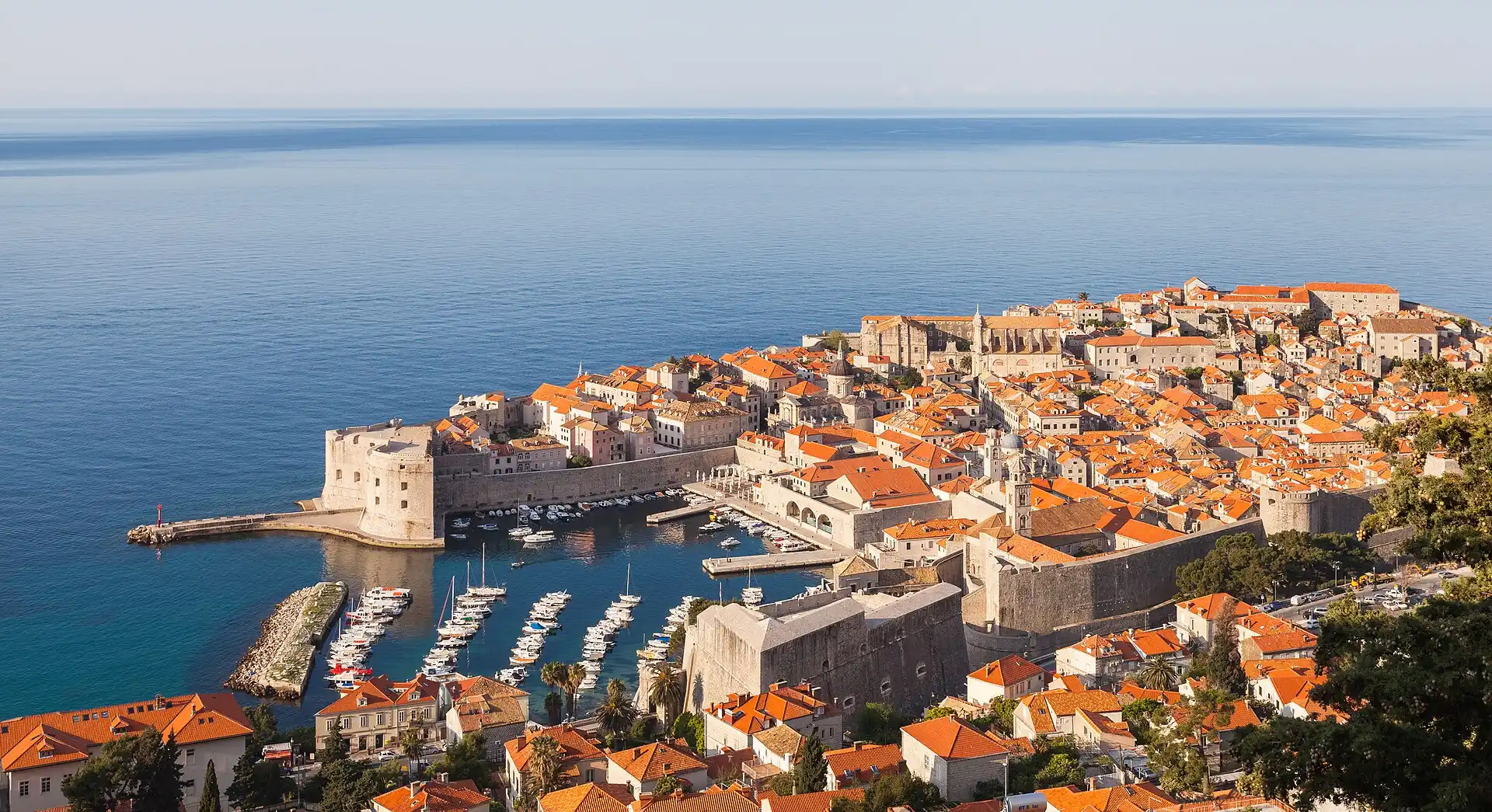
Croatia stretches along the Adriatic with a long island-dotted coast and a continental interior. Dubrovnik sits far south on a narrow coastal strip, closer by road to parts of Bosnia and Herzegovina and Montenegro than to Zagreb. The country uses the euro and is in both the EU and the Schengen Area.
Croatia at a glance
- Currency
- Euro (EUR, €). Croatia switched from the kuna in 2023. Cards and contactless are widely accepted; keep a little cash for small kiosks.
- Language
- Croatian. English is widely spoken in hotels, restaurants and ticket offices in the Old Town. A 'hvala' (thank you) helps.
- Plugs
- Type C and F, 230 V. Bring an adapter if you're coming from the UK or North America.
- Emergency number
- 112
- Entry
- Croatia is in the Schengen Area and the EU. Visitors from many countries can stay up to 90 days in any 180 without a visa; check the rules for your passport before you travel.
- Getting around
- Domestic buses (including Libertas around Dubrovnik) and coastal ferries are the usual ways to move without a car. For flights, Dubrovnik Airport (DBV) is the local gateway; Zagreb and Split are the other main air hubs. Check current bus and ferry timetables before you go.
City guides for Croatia
Croatia
Dubrovnik
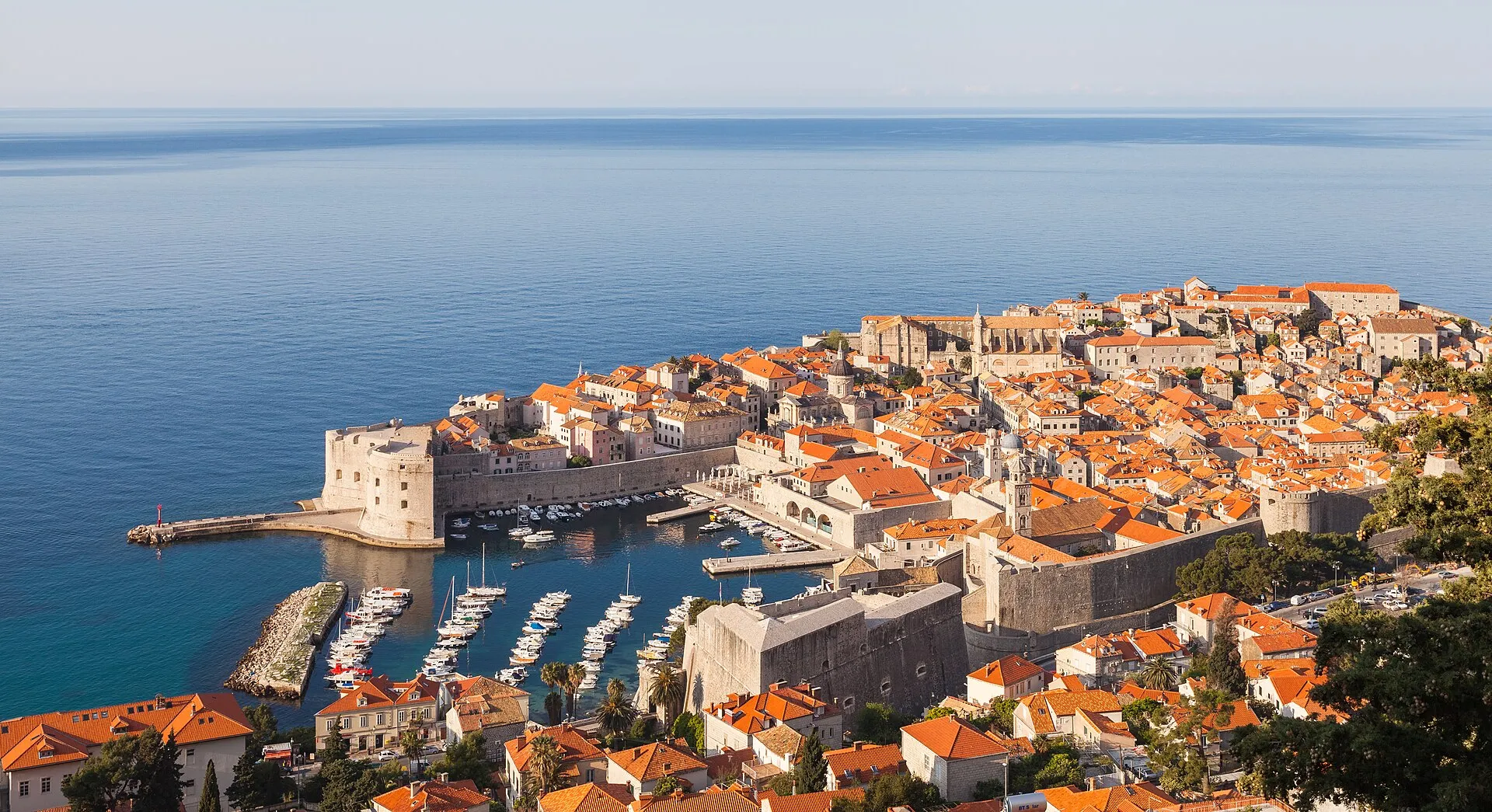
Stone walls around a compact Old Town, a harbour that still runs ferries to Lokrum, and a cable car up Mount Srđ.
Explore Dubrovnik →
Croatia
Split
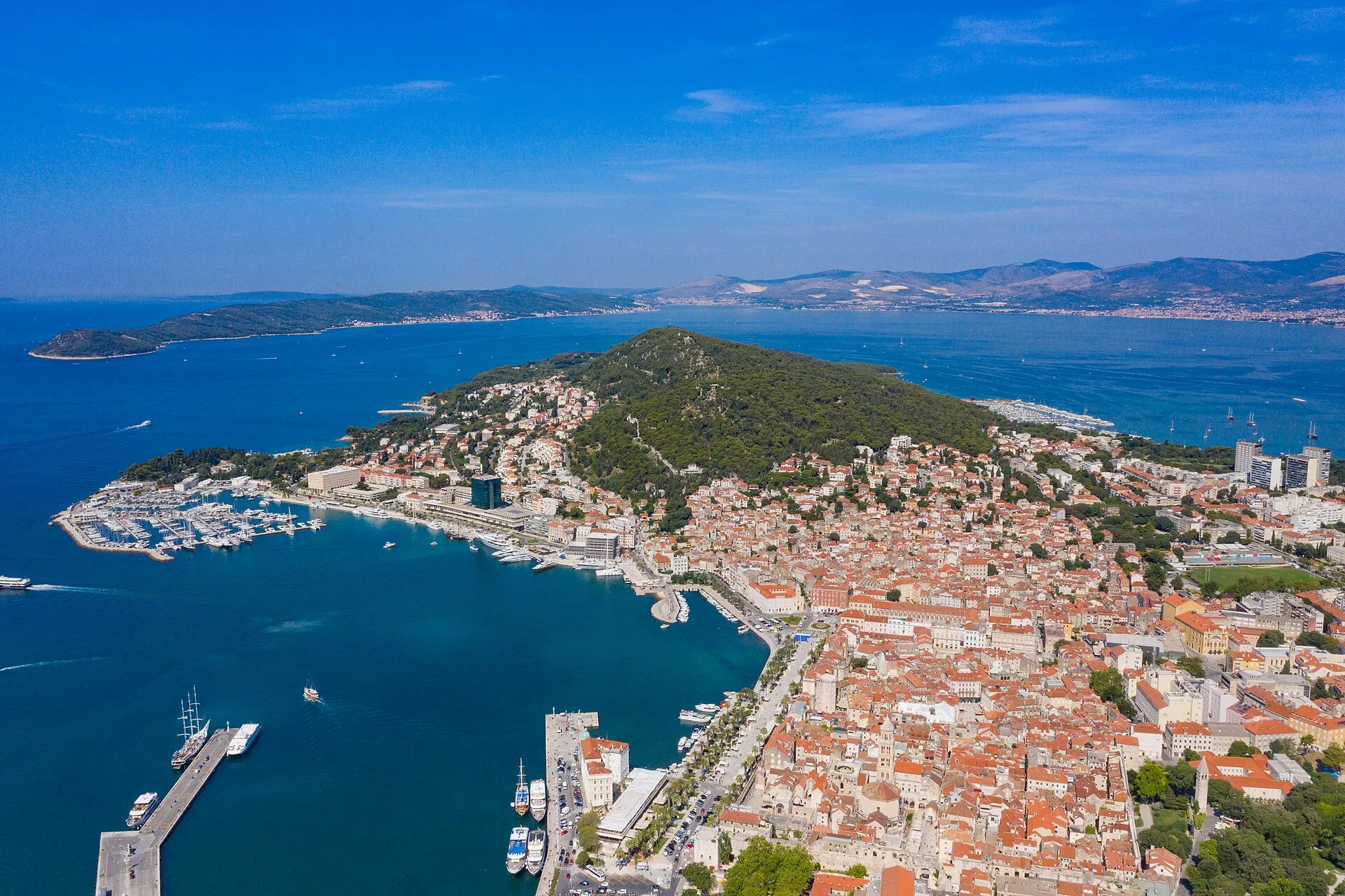
A Roman emperor’s palace that turned into a town, with the Adriatic on the doorstep.
Explore Split →
Dubrovnik
Dubrovnik was the Republic of Ragusa for centuries: a small maritime state that traded, negotiated and stayed independent between bigger powers. The Old Town is still wrapped in its stone walls, and almost everything first-time visitors come for sits inside them or a short walk outside. That makes it easy to cover on foot, and it also means it fills up fast when the cruise ships are in. July and August are the hardest months. November through February are quieter, cooler and cheaper on the walls ticket. Two full days cover the main sights; three if you want Lokrum or a day trip along the coast. Prices in this guide were checked on official sites on 5 November 2026.
If you only have one day in Dubrovnik
- Pile Gate: The main western gate into the walled city. A stone bridge crosses the old moat, a statue of St Blaise (the city's patron) sits above the inner arch, and just inside is the Large Onofrio Fountain. Most day-trippers arrive here, so it's the natural start of any Old Town walk.
- The City Walls: A nearly complete circuit of stone ramparts around the Old Town, with sea views, rooftop views and stops at the big towers (Minčeta on the north, Bokar and St John toward the harbour). The same ticket also covers Fort Lovrijenac outside Pile Gate. Parts of the walls appeared as King's Landing in Game of Thrones; treat that as a film fact, not the reason to climb.
- Large Onofrio Fountain: A 15th-century fountain built by Onofrio della Cava to bring water into the city. The big round structure with 16 carved masks sits right inside Pile Gate and still runs. Locals and visitors fill bottles here; it's one of the first things you see after the gate.
- Stradun (Placa): The wide limestone main street that runs from Pile Gate to Luža Square. After the 1667 earthquake it was rebuilt as a straight, polished promenade. By day it's shops and gelato; in the evening the stone holds the day's heat and the street empties enough to hear your footsteps.
- Rector's Palace: The seat of the elected Rector of the Republic of Ragusa. The Gothic-Renaissance courtyard and state rooms now hold the Cultural History Museum. It's the clearest indoor look at how the old republic ran itself: short terms, strict rules, and a lot of ceremony in a small building.
- Old Harbour and Porporela: The small harbour inside the walls, with the breakwater called Porporela. Boats leave here for Lokrum, and the views back to the fortifications and St John's Fort are some of the best at water level. Sit on the rocks at Porporela if you want a break without paying for a café terrace on Stradun.
- Best time to go
- April to June and September to mid-October are the easiest months: warm enough to swim, without peak-summer crowds. July and August are hot and busy. November to February is low season: many restaurants shorten hours, the cable car closes for December through March (and for short maintenance days in November), and the city walls drop to the winter price. If you want empty ramparts and don't mind a jacket, winter works.
- From the airport
- Libertas suburban buses (lines such as 11, 27 and 38 toward Cavtat/Molunat) stop at the airport; the Konavle one-way fare is €4 (libertasdubrovnik.com, checked 5 November 2026). Private transfers and taxis are the other options. Welcome Pickups lists a Dubrovnik airport transfer page if you want a pre-booked driver.
Split
Split is a working town built inside a Roman palace. Diocletian had it put up around 300 AD, and instead of becoming a ruin it filled with houses, churches and shops, so today you drink coffee between Roman columns and walk through gates that are 1,700 years old. The old town is small. You can cross the palace in five minutes, which makes it easy to explore on foot. Outside the walls are the Riva promenade, the green market, Marjan Hill and the town beach at Bačvice. Split is also the main ferry port for the islands, so many people only pass through. Give it two days. In November and December it’s quiet, boats to the islands run less often, and the Riva gets Christmas lights.
If you only have one day in Split
- The Riva promenade: The wide seafront promenade in front of the palace walls, lined with palms and café terraces. This is where Split goes for an evening walk, and in December it usually hosts the Advent stalls.
- The palace cellars (substructures): Under the emperor’s apartments are huge vaulted halls that levelled the sloping ground. Over the centuries they filled up with rubbish, which is exactly why they survived so well. The central passage is a free souvenir arcade; the side halls are a museum. Game of Thrones fans will recognise them from Daenerys’ scenes.
- The Peristyle: The palace’s central courtyard, lined with granite columns, with the cathedral on one side and the domed Vestibule at the end. A black granite sphinx brought from Egypt still sits by the cathedral steps. In summer, actors in Roman costume pose here; in winter you might have it nearly to yourself.
- Cathedral of St Domnius and the bell tower: This octagonal building was Diocletian’s mausoleum, and in the Middle Ages it became a cathedral dedicated to a saint he had persecuted, which tells you a lot about how history turned out. The Romanesque bell tower next to it is about 57 metres tall and has the best view over the palace roofs.
- Temple of Jupiter: A small Roman temple down a lane off the Peristyle, later turned into the baptistery of St John. The barrel-vaulted stone ceiling is carved with coffers and is among the best-preserved Roman interiors in the palace. A bronze St John by Ivan Meštrović stands inside, and a headless sphinx guards the entrance.
- The Golden Gate and Grgur Ninski: The north gate was the main entrance from the road to Salona, the Roman capital of the region. Just outside stands Ivan Meštrović’s huge bronze of Grgur Ninski, a 10th-century bishop who argued for church services in Croatian. His big toe is polished gold by everyone who rubs it for luck.
- Narodni trg (Pjaca) and Fruit Square: Step through the Iron Gate, the palace’s west gate, and you’re in the medieval town that grew outside the walls. Narodni trg, called Pjaca, has the Gothic old town hall. A few steps south, Fruit Square has a statue of Marko Marulić, the poet known as the father of Croatian literature, with a Venetian tower behind it.
- Prokurative (Republic Square): A big 19th-century square, closed on three sides by neo-Renaissance buildings and open to the sea on the fourth. It was inspired by the Procuratie in Venice’s St Mark’s Square. In summer it hosts concerts; in winter it’s a quiet shortcut.
- Marjan Hill: A forested park on the peninsula west of the centre, with walking paths, small chapels and views over the town and the islands. Steps from the Varoš quarter lead to the first viewpoint and its café in about 15–20 minutes. Keep going for the higher viewpoints and the beaches on the far side.
- Best time to go
- May, June and September for warm sea and fewer crowds. July and August are hot and very busy. Winter is mild and quiet, but island ferries run a reduced timetable.
- From the airport
- The Platanus airport shuttle leaves about 30 minutes after each arrival and goes non-stop to the main bus station by the ferry port: €10 one way, €15 return. Promet Split’s city bus 37 is cheaper at €3 but takes about 50 minutes (both checked 9 November 2026).
Croatia travel FAQ
Which city in Croatia should I visit first?
Dubrovnik: Stone walls around a compact Old Town, a harbour that still runs ferries to Lokrum, and a cable car up Mount Srđ. Split: A Roman emperor’s palace that turned into a town, with the Adriatic on the doorstep.
What currency does Croatia use?
The euro (EUR) since 2023. Cards and contactless payment are widely accepted; the old kuna (HRK) is no longer legal tender.
Which plugs does Croatia use?
Type C and F, 230 V. Bring an adapter if you're coming from the UK or North America.
Is Croatia in Schengen?
Yes. Croatia joined the Schengen Area in 2023, so internal border checks with other Schengen countries are normally lifted.
Travelling to Croatia?
Heads-up: this page contains affiliate links. If you book or buy through them we may earn a small commission at no extra cost to you. It never changes our picks. How we make money.