
Europe
Denmark travel guide
Denmark is a flat, coastal country linking the North Sea and the Baltic. Copenhagen is the capital and travel hub; trains and the Metro make day trips along the Øresund coast and into Sweden straightforward. The country is in the EU and Schengen, but it keeps its own currency, the krone.
Denmark at a glance
- Currency
- Danish krone (DKK). Denmark is in the EU and Schengen, but it does not use the euro. Cards and contactless work almost everywhere; keep a little cash for markets and small bakeries.
- Language
- Danish. English is widely spoken in shops, hotels and restaurants. A 'tak' for thank you goes a long way.
- Plugs
- Type C, F and K, 230 V. Type K is the Danish three-pin socket; many hotels also accept C/F plugs. Bring an adapter if you're coming from the UK or North America.
- Emergency number
- 112
- Entry
- Denmark is in the Schengen Area and the EU. Visitors from many countries can stay up to 90 days in any 180 without a visa; check the rules for your passport before you travel.
- Getting around
- DSB trains and the Copenhagen Metro / S-train network link the capital with Helsingør, Roskilde, the airport and Malmö across the Øresund Bridge. Check dsb.dk and rejseplanen.dk for times and fares.
City guides for Denmark
Copenhagen
Copenhagen is Denmark's capital and the easiest Scandinavian city for a first visit: flat streets, a dense metro, and most of the big sights packed into Indre By and the harbour. Nyhavn's painted houses, the canals, Christiansborg and the King's Garden sit within a short walk of each other. Tivoli sits next to the main station. It's an expensive city by European standards (hotels and restaurants especially), but a lot of the postcard views cost nothing. Two full days cover the centre; three lets you add Louisiana, Kronborg or a hop over the bridge to Malmö. Prices in this guide were checked on official sites on 6 November 2026.
If you only have one day in Copenhagen
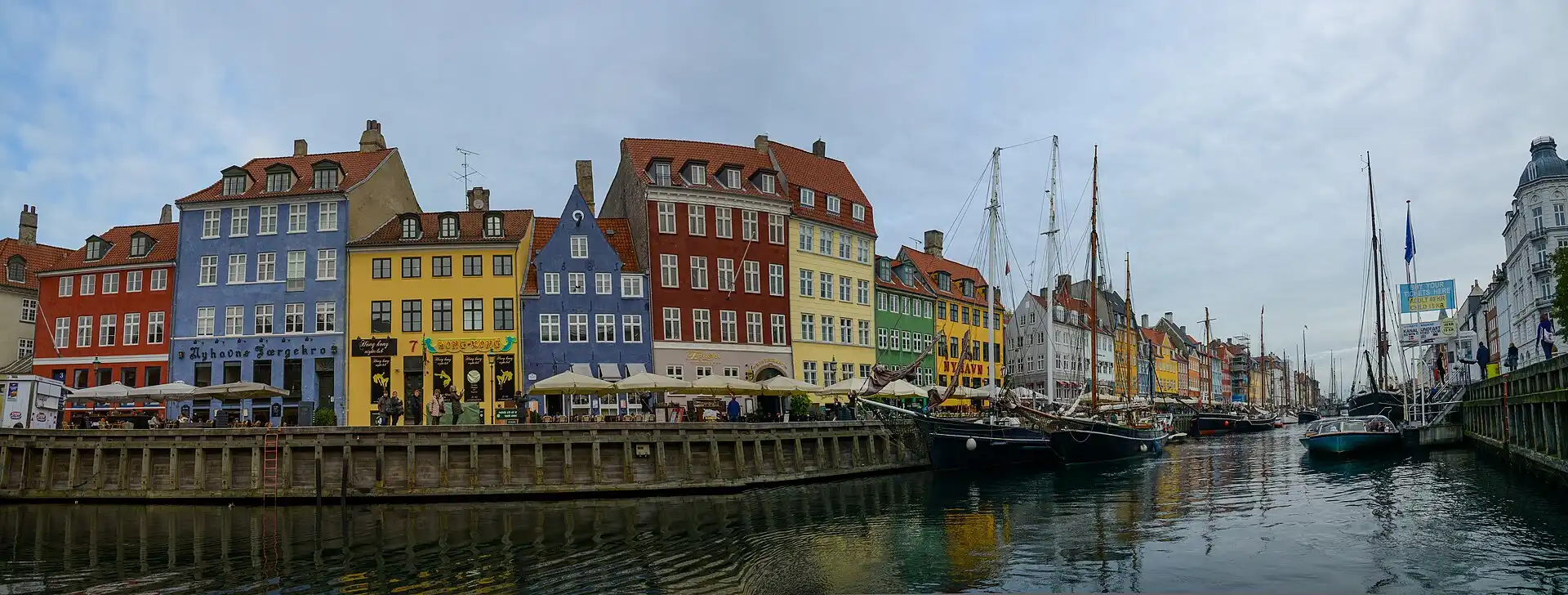
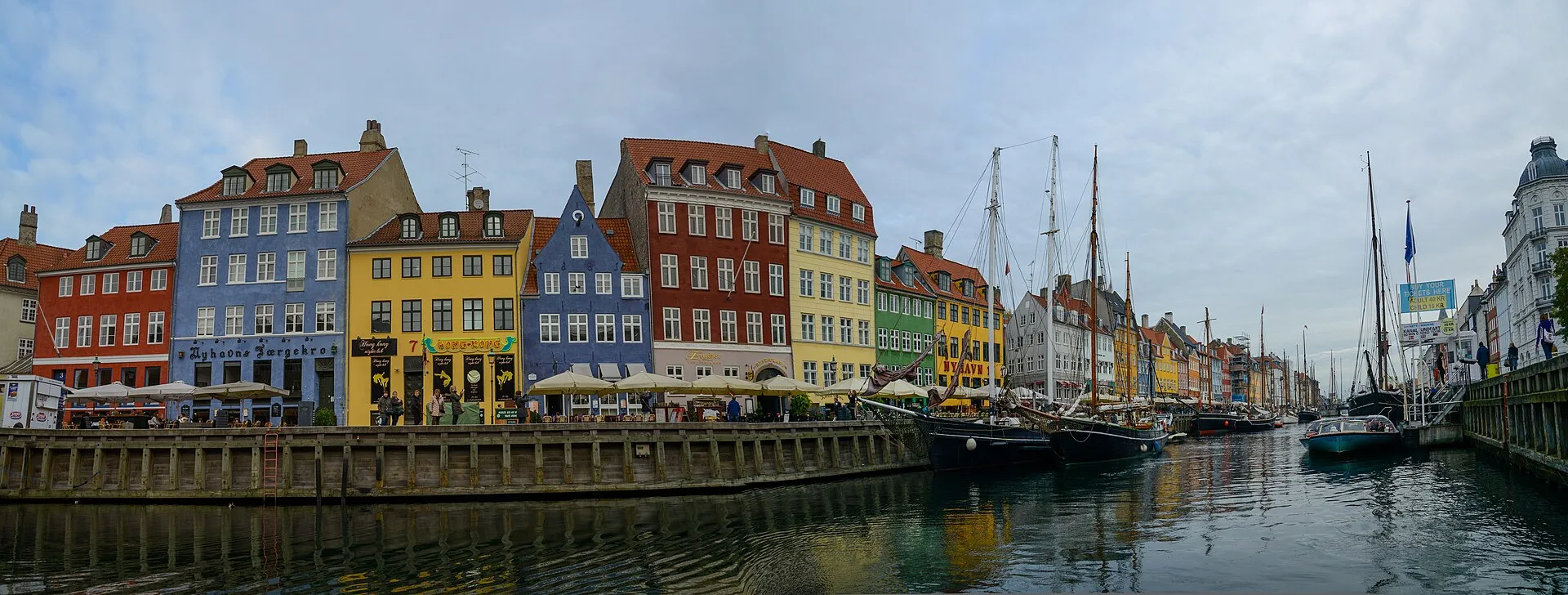
- Nyhavn: The canal lined with 17th- and 18th-century townhouses that fills every Copenhagen postcard. Wooden boats sit along the quay, and the terraces fill up as soon as the sun comes out. Hans Christian Andersen lived in more than one of these houses.
- Canal and harbour boat tour: The easiest way to see how Copenhagen sits on the water: the Little Mermaid, Amalienborg, the Opera House and the narrow canals of Christianshavn all show up from the boat. Stromma runs classic one-hour tours from Nyhavn and Ved Stranden.
- Christiansborg Palace (exterior and Tower): One palace island holds parliament, the Supreme Court and the royal reception rooms. From outside you get the riding ground and the canal. The Tower (Folketinget's viewing platform) is free and gives a clear view over the city.
- Rundetårn (Round Tower): A 17th-century tower built as an astronomical observatory for Christian IV. You walk up a wide spiral ramp (no stairs for most of the climb) to a platform with a 360° view over the old town's roofs.
- Strøget and Indre By lanes: Strøget is the long pedestrian shopping spine from Rådhuspladsen to Kongens Nytorv. The lanes off it (Latin Quarter, towards the Round Tower) are where you find bookshops, cafés and quieter courtyards.
- Rosenborg Castle: Christian IV's Renaissance castle from the early 1600s, set in the King's Garden. Inside: royal apartments and the treasury with the Danish crown jewels. It's smaller than it looks from outside, and timed tickets keep the rooms from packing solid.
- Kongens Have (King's Garden): Copenhagen's oldest royal garden, laid out in the early 17th century around Rosenborg. Lawn, tree avenues and plenty of locals on picnic blankets when the weather cooperates.
- Best time to go
- May to September for long evenings and outdoor cafés. July is peak. November to January is cold and dark, but Tivoli's Christmas season and the museums make a solid short break.
- From the airport
- Metro line M2 runs from the airport terminal into town (Kongens Nytorv, Nørreport and beyond) in about 15–20 minutes. A 3-zone single ticket covers the airport–city trip (DKK 30 adult on m.dk, checked 6 November 2026). A City Pass Small (zones 1–4, from DKK 100 for 24 hours) also covers it.
Denmark travel FAQ
How many days do I need in Copenhagen?
Two full days cover Nyhavn, a canal tour, the royal sites, Rosenborg and one museum. Three days lets you add Tivoli and a day trip to Louisiana, Kronborg, Roskilde or Malmö.
What currency does Denmark use?
The Danish krone (DKK). Denmark does not use the euro. Cards and contactless payment are accepted almost everywhere; choose DKK if a card machine offers a currency choice.
Which plugs does Denmark use?
Type C, F and K, 230 V. Type K is the Danish three-pin socket. Bring an adapter if you're coming from the UK or North America.
Is Denmark in Schengen?
Yes. Denmark is in the Schengen Area and the EU, so internal border checks with other Schengen countries are normally lifted—but always follow current entry rules for your passport.
Travelling to Denmark?
Heads-up: this page contains affiliate links. If you book or buy through them we may earn a small commission at no extra cost to you. It never changes our picks. How we make money.