
Europe
Slovenia travel guide
Slovenia is a small country between the Alps and the Adriatic, bordered by Italy, Austria, Hungary and Croatia. Ljubljana is the capital and sits roughly in the middle, so the mountains, the lakes of Bled and Bohinj, the caves of the Karst and the short coastline around Piran are all within about two hours.
Slovenia at a glance
- Currency
- Euro (EUR). Cards are accepted in most places; carry a little cash for market stalls.
- Language
- Slovene. English is widely spoken, especially by younger people and in tourism.
- Plugs
- Type C and F, 230 V. Visitors from the UK and North America need an adapter.
- Emergency number
- 112
- Entry
- Slovenia is in the Schengen Area and the EU. Visitors from many countries can stay up to 90 days in any 180 without a visa; check the rules for your passport before you travel.
- Getting around
- Buses are often quicker than trains for Bled and the coast; they leave from Ljubljana’s main bus station next to the railway station. If you drive on motorways, you need an e-vignette, bought online before you join the motorway.
City guides for Slovenia
Ljubljana
Ljubljana is one of the easiest capitals in Europe to walk. The old town sits on both banks of the Ljubljanica, much of the centre has been closed to cars for years, and the castle on the hill is a short climb or a one-minute funicular ride away. You’ll keep hearing one name: Jože Plečnik. The architect redesigned bridges, the market, the library and the riverbanks in the 1920s and 1930s, and that work is now on the UNESCO World Heritage List. Give it a day for the town, then use it as a base for Lake Bled and the caves.
If you only have one day in Ljubljana
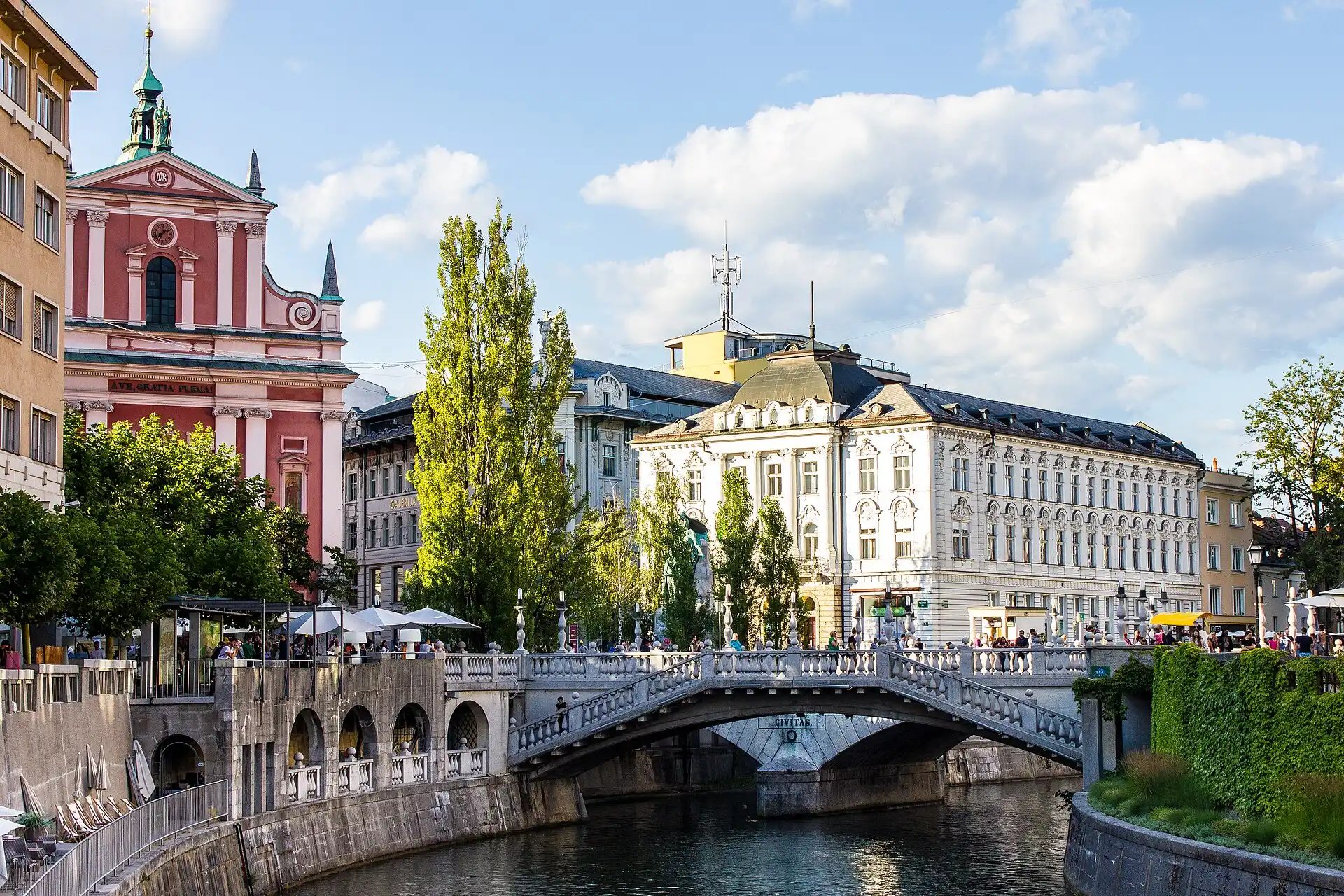
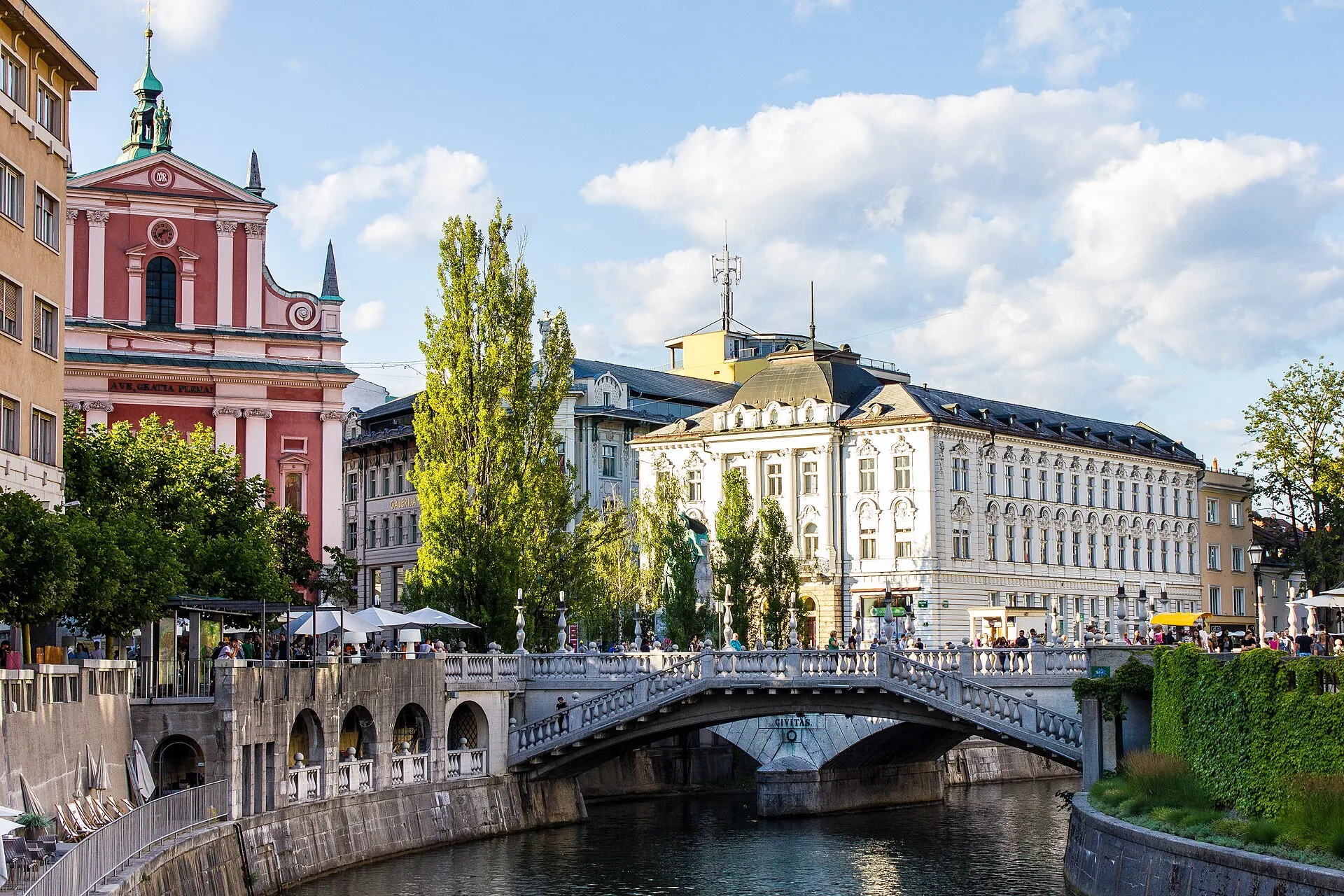
- Prešeren Square and the Franciscan Church: The city’s meeting point. The poet France Prešeren stands on his monument with a muse above him, and he’s looking at a window across the square: the bust of Julija Primic, the woman he loved, looks back from the house on the corner of Wolfova ulica. Behind him is the pink Franciscan Church of the Annunciation, coloured for the Franciscan order.
- Triple Bridge (Tromostovje): The middle bridge is a stone arch from 1842. To stop it being a bottleneck, Jože Plečnik added two footbridges at a slight angle on each side, built in 1931–1932. The result is three bridges side by side, with balustrades and lamps, and it’s the most photographed spot in town.
- Town Hall and the Robba Fountain: The Town Hall was built in 1484 and given its Baroque front in 1717–1719. In front stands the Robba Fountain, made in 1751 by the sculptor Francesco Robba, with three figures for the rivers of Carniola. What you see outside is a replica from 2006; the restored original is indoors in the National Gallery.
- Ljubljana Cathedral (St Nicholas): A Baroque church built between 1701 and 1706, with a dome added to the plan by the Jesuit architect Andrea Pozzo. Look at the bronze doors before you go in: they were made in 1996 for the visit of Pope John Paul II, and the front one, the Slovene Door, shows scenes from Slovene history.
- Central Market (Plečnik’s Market): An open-air market on Vodnik Square plus Plečnik’s long riverside market halls, built in 1940–1942. The halls have big semicircular windows on the river side and a colonnade on the street side. It’s where Ljubljana buys its vegetables, cheese and flowers, and in the colonnade by the Triple Bridge you’ll find herbs, spices and crafts.
- Dragon Bridge (Zmajski most): Four copper dragons guard the corners of this bridge, which opened on 4 October 1901. It was one of Europe’s earliest reinforced concrete bridges and is a good example of the Vienna Secession style. It was first named after Emperor Franz Joseph; it’s been the Dragon Bridge since 1919, and the dragon is now the city’s symbol.
- Butchers’ Bridge (Mesarski most): A footbridge opened in 2010, on a spot where Plečnik had planned a bridge in the 1930s. It has glass strips along the sides, steel-wire railings covered in love padlocks, and bronze sculptures from Greek myth and the Bible by Jakov Brdar, including Prometheus and Adam and Eve.
- Ljubljana Castle: The castle probably started as an 11th-century fortress and was largely rebuilt in the 15th century. Today you get exhibitions on Slovene history, a puppetry museum, a chapel and the Viewing Tower from 1848, with the best view over the red roofs. On a clear day you can see the Alps.
- Best time to go
- May to September for the riverside cafés. In December the centre is full of lights and Christmas stalls, and it’s cold but rarely crowded.
- From the airport
- Nomago runs shared airport shuttles from €12 per person, about an hour to the centre (Nomago, checked 11 November 2026). There’s also a public bus to the main bus station; check the timetable on the airport’s site.
Slovenia travel FAQ
How many days do I need in Ljubljana?
One full day covers the old town and the castle. Two days gives you time for Plečnik’s library, Tivoli Park and Metelkova, or a day trip to Lake Bled.
What currency does Slovenia use?
The euro (EUR), since 2007. Cards are widely accepted.
Which plugs does Slovenia use?
Type C and F, 230 V. Bring an adapter if you’re coming from the UK or North America.
Do I need a vignette to drive in Slovenia?
Yes, on motorways and expressways. It’s electronic and linked to your number plate, so buy it online before you drive.
Travelling to Slovenia?
Heads-up: this page contains affiliate links. If you book or buy through them we may earn a small commission at no extra cost to you. It never changes our picks. How we make money.