
Europe
Sweden travel guide
Sweden is a long country in Scandinavia, stretching from the Baltic beaches of Skåne up into the Arctic. Stockholm, the capital, is on the east coast where Lake Mälaren meets the sea; Gothenburg and Malmö are the other big cities, and Swedish Lapland in the far north is the place for northern lights and snow.
Sweden at a glance
- Currency
- Swedish krona (SEK). Sweden is close to cashless: cards and phone payments work almost everywhere, and some places (the Vasa Museum, for one) take cards only.
- Language
- Swedish. English is spoken almost everywhere.
- Plugs
- Type C and F, 230 V. Visitors from the UK and North America need an adapter.
- Emergency number
- 112
- Entry
- Sweden is in the EU and the Schengen Area. Visitors from many countries can stay up to 90 days in any 180 without a visa; check the rules for your passport before you travel.
- Getting around
- Trains link Stockholm, Gothenburg and Malmö in a few hours, and SJ sells tickets online. In Stockholm, one SL ticket covers the metro, buses, trams, commuter trains and some ferries.
City guides for Sweden
Stockholm
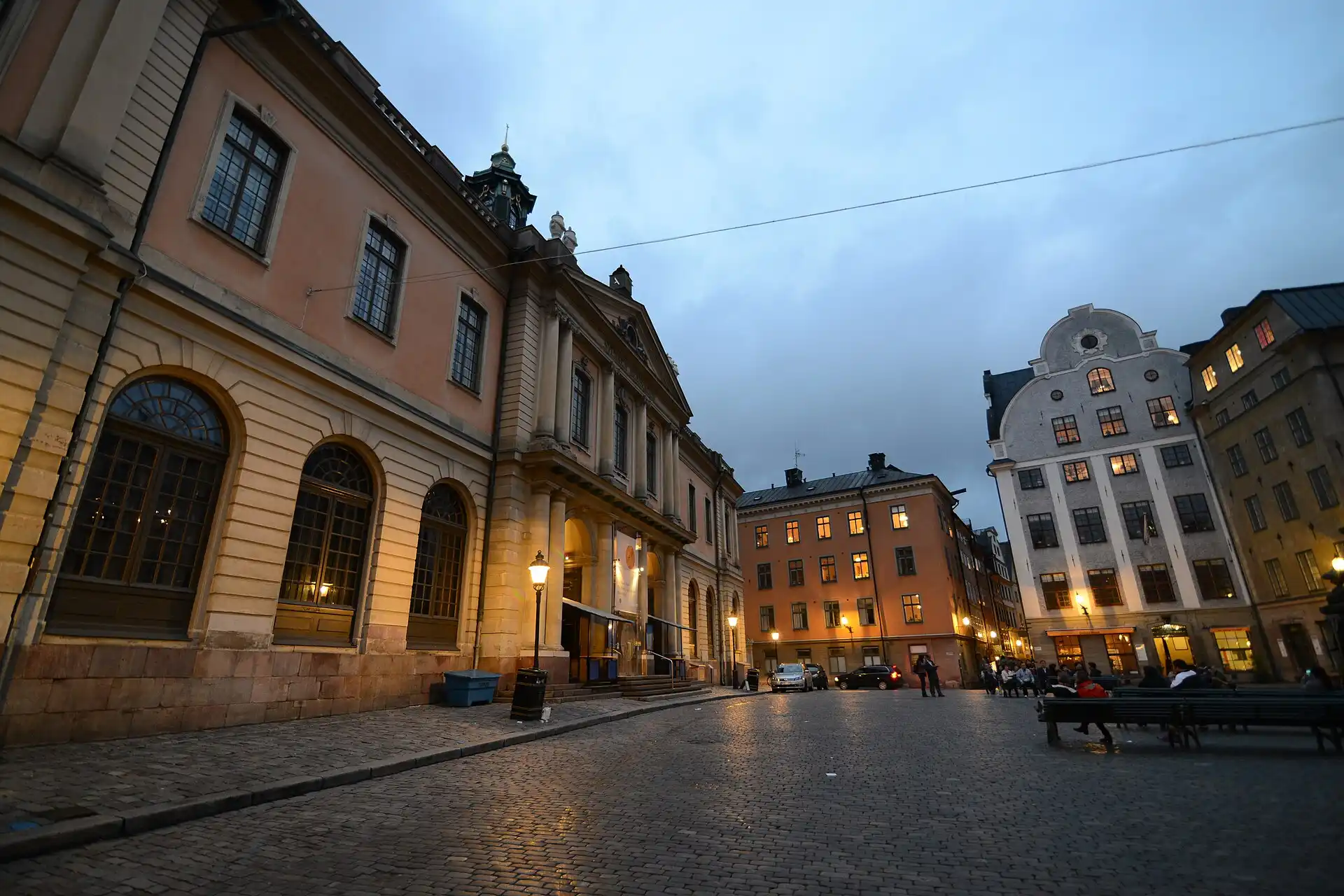
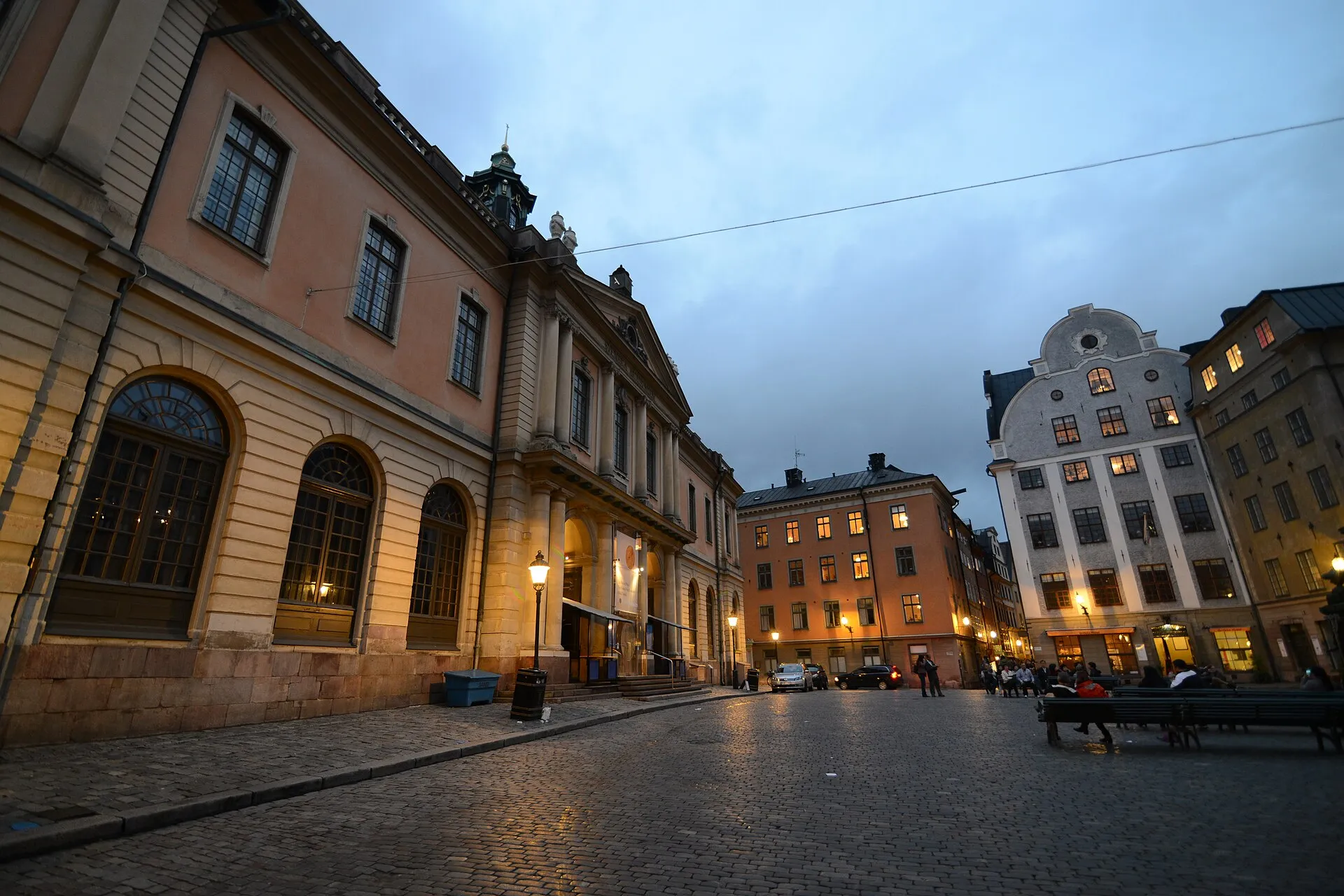
Stockholm sits where Lake Mälaren meets the Baltic, spread over fourteen islands joined by bridges. Gamla Stan, the old town, is the bit everyone comes for: narrow lanes, ochre and red merchant houses, the Royal Palace and the cathedral, all inside a few hundred metres. A short ferry ride away, Djurgården has the Vasa Museum, Skansen and ABBA The Museum next to each other. It isn’t cheap, and in winter the days are short. Still, it’s compact, it’s easy on foot, and from late November the Christmas markets on Stortorget and at Skansen make the dark afternoons a lot cosier.
If you only have one day in Stockholm
- Stortorget and its Christmas market: The old town’s main square, and the one on every postcard: tall, narrow merchant houses in red, ochre and orange. It has a grim past. In November 1520 the Danish king Christian II had dozens of Swedish nobles and clergy executed here, an event remembered as the Stockholm Bloodbath. These days it’s cafés, a well in the middle, and from 21 November to 23 December 2026 a Christmas market with red stalls, mulled wine (glögg) and gingerbread.
- Stockholm Cathedral (Storkyrkan): The city’s oldest church, right next to the palace and used for royal weddings and coronations. Inside, look for the huge wooden statue of St George fighting the dragon from 1489, and the Sun Dog Painting (Vädersolstavlan), a copy of a 1535 picture that is the oldest view of Stockholm in colour.
- The Royal Palace (Kungliga slottet): The king’s official residence, built on the site of the Tre Kronor castle that burned down in 1697 and finished in 1754. One ticket covers the Royal Apartments, the Treasury with the regalia and the Tre Kronor Museum in the medieval cellars. The changing of the guard in the outer courtyard is free to watch.
- Mårten Trotzigs gränd: Stockholm’s narrowest alley: 90 cm across at its tightest point, with 36 steps climbing between the houses. It’s named after Mårten Trotzig, a German-born merchant who bought property here in the 1590s. It’s a 30-second walk and a classic photo.
- Riddarholmen Church: A former Franciscan monastery church that became the burial church of Swedish monarchs. Its cast-iron openwork spire is easy to spot from the water. Inside are the tombs of kings from Gustavus Adolphus to Gustaf V and the coats of arms of the Order of the Seraphim on the walls.
- Stockholm City Hall (Stadshuset): A red-brick building by the architect Ragnar Östberg, opened in 1923. The guided tour takes you through the Blue Hall, where the Nobel banquet is held every December (it isn’t blue; Östberg changed his mind), and the Golden Hall, covered in gold mosaics. The garden on the water is free.
- Vasa Museum: The warship Vasa sank on her maiden voyage in Stockholm harbour on 10 August 1628, barely out of port. She was raised in 1961, and almost all of what you see is original. The ship fills a dark hall several storeys high, and you can look at her from every deck level. If you only do one museum in Stockholm, make it this one.
- Monteliusvägen: A short footpath along the top of the cliffs on Södermalm with benches and a wide view across Riddarfjärden to the City Hall, Riddarholmen and the spires of Gamla Stan. It costs nothing and it’s the view locals take their visitors to.
- Best time to go
- May to September for long, light days and the archipelago boats. Late November to Christmas is cold and dark by mid-afternoon, but that’s when the Stortorget and Skansen Christmas markets are on.
- From the airport
- The Arlanda Express train takes about 18 minutes to Stockholm Central; a flexible adult one-way ticket is 349 SEK, or 199 SEK as an early-bird ticket booked at least five days ahead (Arlanda Express, checked 12 November 2026). Airport buses and SL commuter trains are cheaper but slower.
Sweden travel FAQ
How many days do I need in Stockholm?
Two full days covers Gamla Stan and Djurgården. Three gives you time for Södermalm, the metro art or a day trip to Drottningholm or the archipelago.
What currency does Sweden use?
The Swedish krona (SEK). Sweden isn’t in the euro, and cards are accepted almost everywhere; many places don’t take cash.
Which plugs does Sweden use?
Type C and F, 230 V. Bring an adapter if you’re coming from the UK or North America.
Is Sweden expensive to visit?
Yes, compared with most of Europe, especially eating out and alcohol. Free sights, lunch deals and a travelcard keep it manageable.
Travelling to Sweden?
Heads-up: this page contains affiliate links. If you book or buy through them we may earn a small commission at no extra cost to you. It never changes our picks. How we make money.