
Europe
Switzerland travel guide
Switzerland is a small, mountainous country between Germany, France, Italy and Austria, with four national languages. Most visitors combine a city such as Zurich, Lucerne or Geneva with the Alps and the lakes.
Switzerland at a glance
- Currency
- Swiss franc (CHF). Cards and contactless work almost everywhere. Some places take euros, but your change comes back in francs.
- Language
- German (Swiss German is spoken). English is widely understood in hotels, shops and at the sights.
- Plugs
- Type J, 230 V. Two-pin European plugs (Type C) usually fit; UK and North American plugs need an adapter.
- Emergency number
- 112
- Entry
- Switzerland isn’t in the EU but it is in the Schengen Area. Visitors from many countries can stay up to 90 days in any 180 without a visa; check the rules for your passport before you travel.
- Getting around
- SBB trains run often and on time between the cities, and boats, cogwheel railways and cable cars take you up the mountains. Swiss Travel Passes and Half Fare Cards can save money if you travel a lot.
City guides for Switzerland
Switzerland
Lucerne
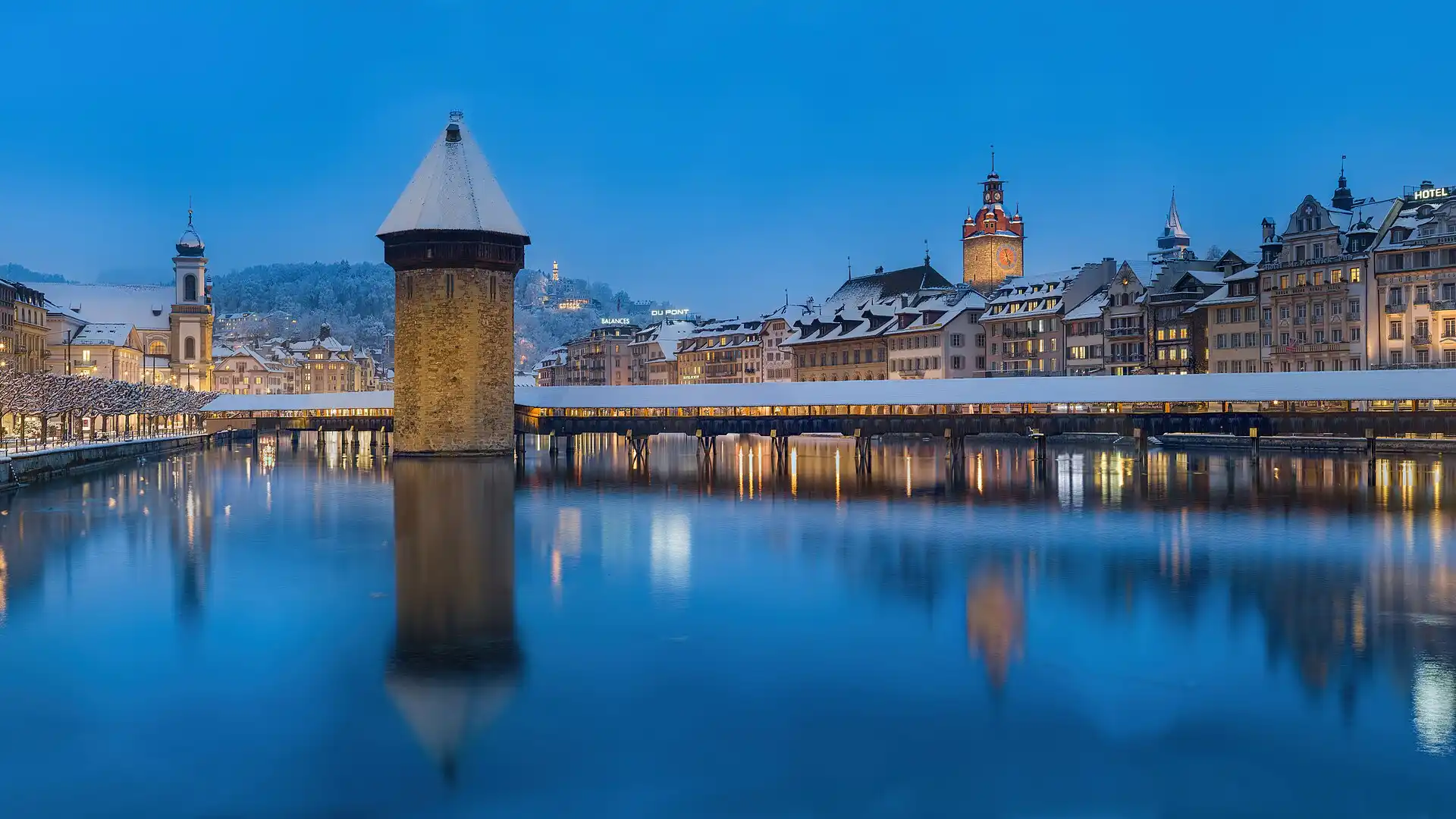
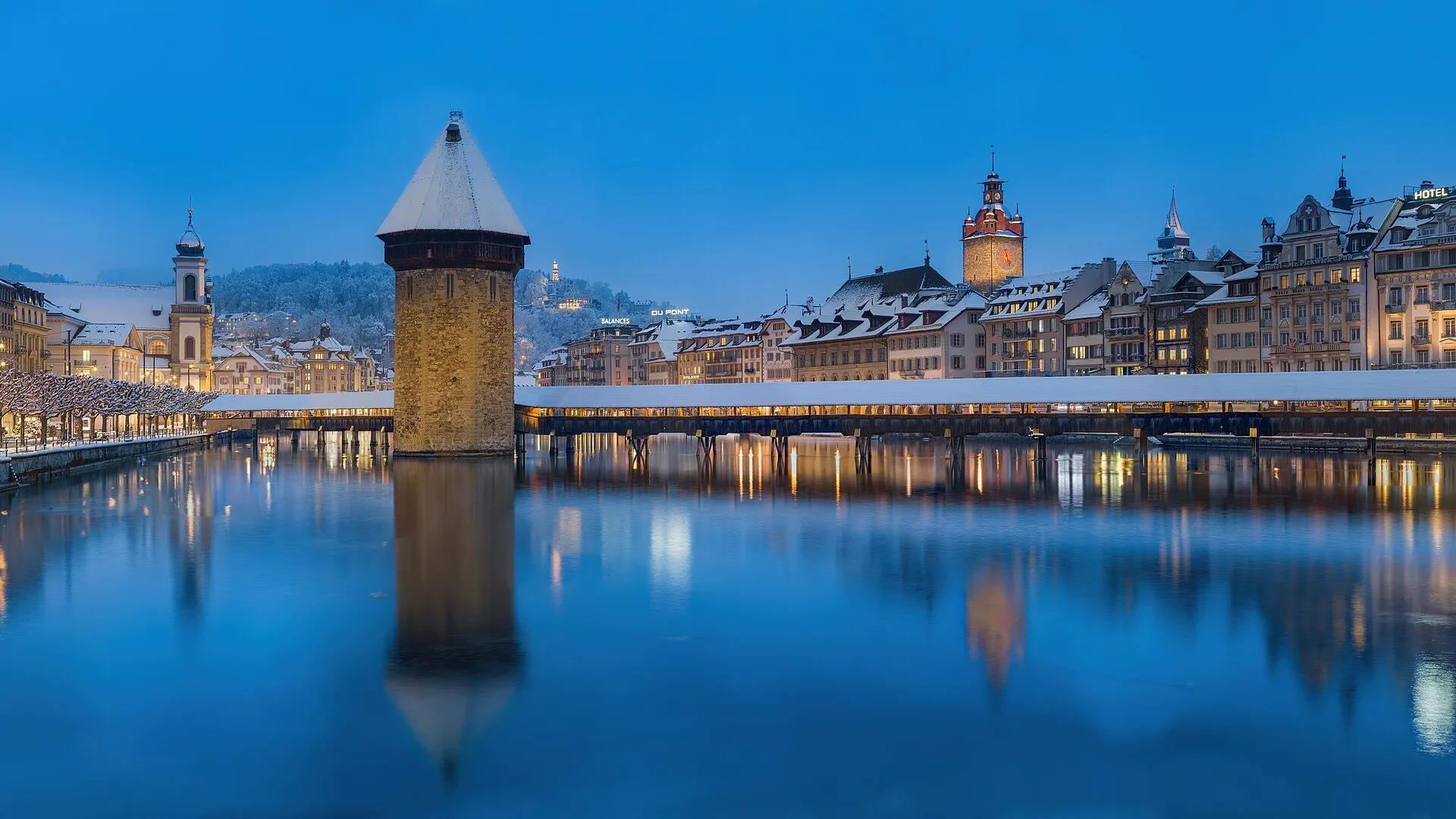
Two wooden bridges, a dying stone lion and a lake with Mount Pilatus behind it.
Explore Lucerne →
Switzerland
Zurich
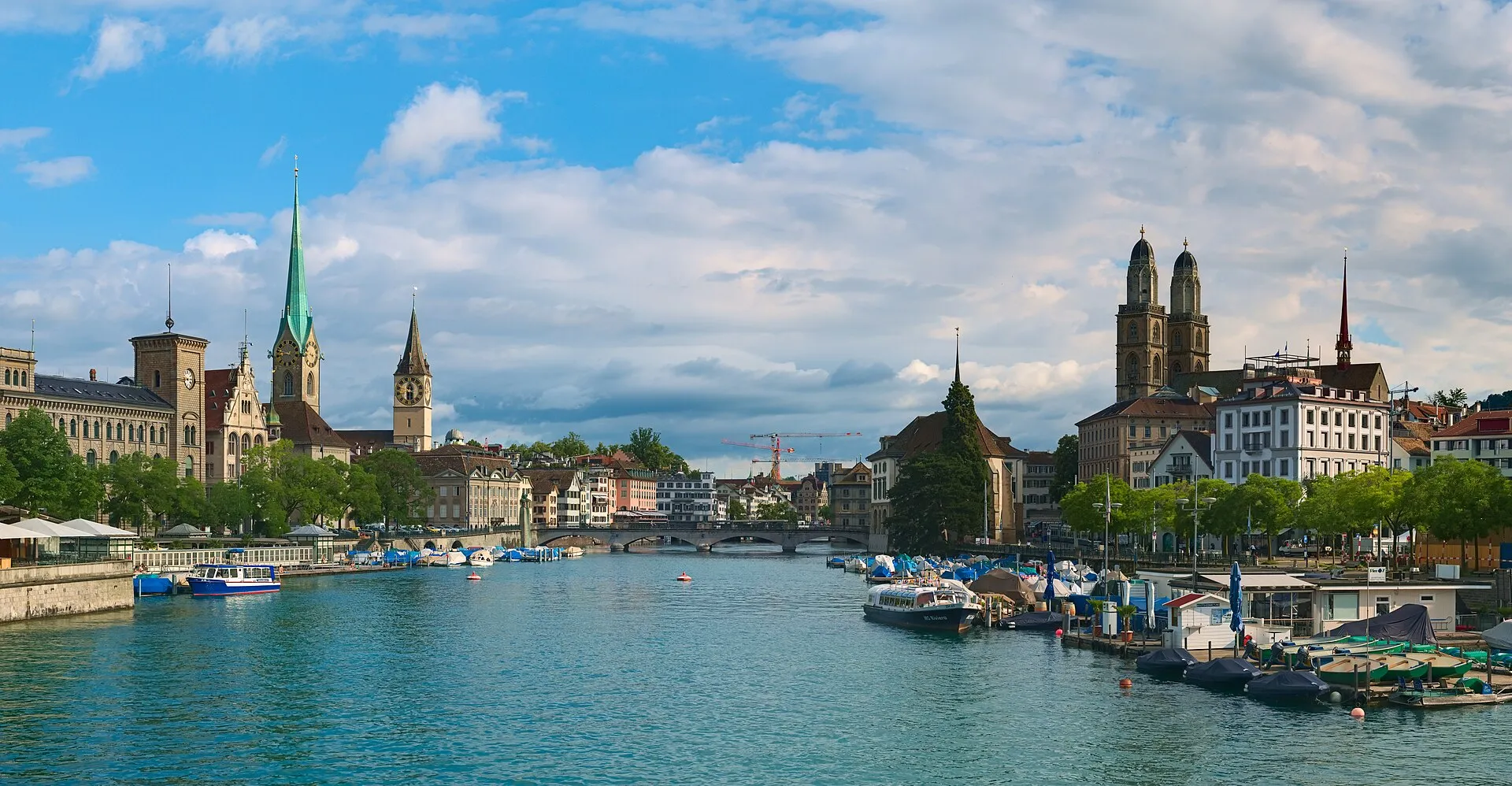
A clear lake, an old town on both banks of the river, Chagall windows, Europe’s biggest church clock face and chocolate by the box.
Explore Zurich →
Lucerne
Lucerne sits where the river Reuss leaves Lake Lucerne, with the Alps lined up behind it. The old town is small. In an afternoon you can cross both covered wooden bridges, see the Lion Monument and walk below the medieval Musegg wall. The rest of your time goes on the water and the mountains: Pilatus and Rigi are both close enough for a half-day trip. It isn’t cheap. Still, the squares, bridges and lakefront cost nothing, and hotel guests ride the city buses for free. In December there are Christmas markets on the Franziskanerplatz (3 to 21 December 2026) and by the KKL on the lake.
If you only have one day in Lucerne
- Chapel Bridge and Water Tower (Kapellbrücke): A covered wooden footbridge from around 1365, crossing the Reuss at an angle with the stone Water Tower halfway along. Look up as you walk: triangular paintings from the 1600s hang in the roof gables. A fire in August 1993 destroyed most of the bridge and many of the paintings. It was rebuilt within a year, which is why parts of it look so new.
- Jesuit Church (Jesuitenkirche): Built from 1666 to 1677, it was the first large Baroque church in Switzerland. The white-and-pink interior is lighter than you’d expect from the river front. Those onion-topped towers weren’t finished until 1893.
- Weinmarkt, Kornmarkt and the painted houses: The old town is a string of small squares named after what was sold there: wine on the Weinmarkt, grain on the Kornmarkt. Many houses have painted facades. The Old Town Hall on the Kornmarkt dates from the early 1600s.
- Spreuer Bridge (Spreuerbrücke): The other covered bridge, further downstream and much quieter. It was completed to the left bank in 1408. In the Middle Ages this was the only bridge from which people were allowed to throw chaff (Spreu) into the river, hence the name. Its roof paintings are a Dance of Death series by Kaspar Meglinger from the 1600s.
- Musegg Wall and towers (Museggmauer): The old town’s northern wall still stands, 870 metres long with nine towers along the hill. In season you can climb several of them and walk parts of the battlements. The Zyt tower has the city’s clock, and it’s allowed to strike a minute before every other clock in Lucerne.
- Lion Monument (Löwendenkmal): A dying lion carved into a sandstone cliff above a pond. Bertel Thorvaldsen designed it and Lukas Ahorn carved it in 1820–21, in memory of the Swiss Guards killed in 1792 when revolutionaries stormed the Tuileries Palace in Paris. Mark Twain called it the most mournful and moving piece of stone in the world.
- Glacier Garden (Gletschergarten): Next to the Lion Monument. In 1872, workers digging a wine cellar found glacier potholes, carved out about 20,000 years ago. There’s a museum, a mirror maze and a viewing tower above them.
- KKL Luzern and the lakefront: Jean Nouvel’s culture and congress centre opened in 1998 next to the station, with a huge flat roof that sticks out towards the lake. The concert hall is known for its sound, and the Kunstmuseum Luzern sits on the top floor. From late November, the RUDOLFS Christmas market sets up in the Inseli park next door.
- Best time to go
- May to October for boat trips and the Musegg towers (open 1 April to 1 November). December for the Christmas markets, with short days and cold, often grey weather.
- From the airport
- Trains run from Zurich Airport to Lucerne station in about an hour, often with a change at Zurich HB. Check fares on sbb.ch; saver tickets can be much cheaper than the full price.
Zurich
Zurich is Switzerland’s biggest city, and it’s smaller and calmer than you might think. The old town sits on both banks of the river Limmat, with the twin towers of the Grossmünster on one side and the Fraumünster and St Peter’s on the other. Walk five minutes and you’re on the lake. It’s expensive, no doubt about it, but the walks, the views, the churches and the lakefront cost nothing. From 19 November 2026 the Christmas markets open: under the giant tree in the main station, in the lanes of the Niederdorf and at Bellevue Noël by the Opera House.
If you only have one day in Zurich
- Lindenhof: A quiet square with lime trees on a hill above the river, where the Romans had a fort. It has one of the best views of the old town, the Limmat and the university on the other side.
- St Peter’s Church: Zurich’s oldest parish church has the biggest church clock face in Europe: almost nine metres across. You can read it from far across the old town, which was the whole point.
- Bahnhofstrasse and Paradeplatz: One of the most expensive shopping streets in the world runs from the main station to the lake, with banks, watch shops and department stores. At Paradeplatz, the big banks face Confiserie Sprüngli, famous for its tiny macarons, the Luxemburgerli.
- Fraumünster and the Chagall windows: The church across the river has five stained-glass windows by Marc Chagall in the choir, made in 1970, plus a big window by Augusto Giacometti. The abbey was founded in 853 by King Louis the German for his daughter.
- Lake Zurich and Bürkliplatz: The lake starts right where the city centre ends. Walk along the shore, watch the swans, and on a clear day you’ll see the Alps at the far end. Boats leave from Bürkliplatz for short trips or longer cruises.
- Grossmünster: The twin towers of the Grossmünster are the symbol of Zurich. Legend says Charlemagne founded the church where his horse knelt at the graves of the city’s patron saints, Felix and Regula. In 1519 Huldrych Zwingli began the Swiss Reformation here.
- Niederdorf: The lanes of the old town on the east bank, full of bars, small shops and old houses with names instead of just numbers. Spiegelgasse is where the Dada art movement started in 1916, at the Cabaret Voltaire, and Lenin lived a few doors down.
- Polybahn and the ETH terrace: A little red funicular from 1889 climbs from Central to the terrace of ETH Zurich, the university where Albert Einstein studied. From the top you look out over the roofs of the old town to the lake.
- Best time to go
- June to September for swimming in the lake and long evenings. Late November to Christmas for the markets. Winters are grey and cold but rarely snowy in town.
- From the airport
- Trains run from the airport to Zürich HB (the main station) several times an hour and take about 10–15 minutes. A ZVV single ticket for the airport zone plus the city costs CHF 7.20 in 2nd class (3 zones, ZVV tariff, checked 18 November 2026).
Switzerland travel FAQ
Which city in Switzerland should I visit first?
Lucerne: Two wooden bridges, a dying stone lion and a lake with Mount Pilatus behind it. Zurich: A clear lake, an old town on both banks of the river, Chagall windows, Europe’s biggest church clock face and chocolate by the box.
What currency does Switzerland use?
The Swiss franc (CHF). Some places take euros, but you’ll get your change in francs and the rate isn’t great.
Which plugs does Switzerland use?
Type J, 230 V. Thin two-pin European plugs usually fit; bring an adapter from the UK or North America.
Is Switzerland expensive?
Yes, one of the most expensive countries in Europe. Supermarket lunches and free lakefronts help.
Travelling to Switzerland?
Heads-up: this page contains affiliate links. If you book or buy through them we may earn a small commission at no extra cost to you. It never changes our picks. How we make money.