
Europe
Turkey travel guide
Turkey bridges Europe and Asia. Istanbul is the biggest city and the main travel hub, while Ankara is the capital. Cappadocia, the Aegean coast around Izmir and Ephesus, and the Turquoise Coast around Antalya are the other big draws. Domestic flights are the quickest way to cover the long distances.
Turkey at a glance
- Currency
- Turkish lira (TRY). Inflation is high, so lira prices go up several times a year. Some major sights are priced in euros and charged in lira at the day’s rate. Cards are widely accepted; carry some cash for small shops and tips.
- Language
- Turkish. English is common in hotels and at the big sights in Sultanahmet and Beyoğlu, less so in local neighbourhoods. ‘Teşekkürler’ (thank you) helps.
- Plugs
- Type C and F, 230 V. Bring an adapter if you’re coming from the UK or North America.
- Emergency number
- 112
- Entry
- Entry rules depend on your passport. Many visitors can enter visa-free for short stays, others need an e-Visa, which is issued on the official site evisa.gov.tr. Check the current rules for your nationality before you travel.
- Getting around
- Istanbul has two airports (IST on the European side, SAW on the Asian side) with frequent domestic flights. High-speed trains link Istanbul with Ankara and Konya; long-distance buses cover most other routes.
City guides for Turkey
Istanbul
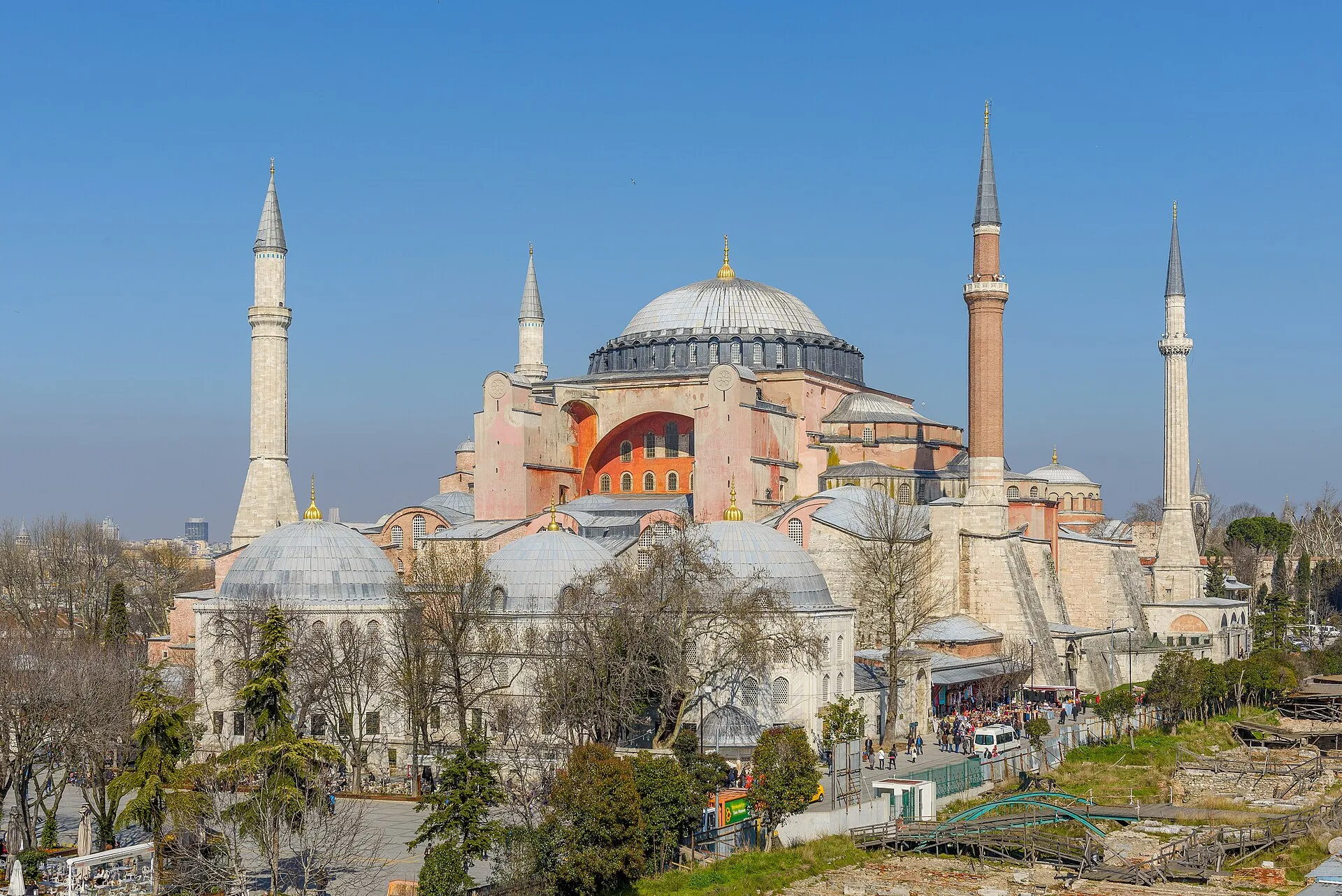
Istanbul’s old city fits into a surprisingly small space. Hagia Sophia, the Blue Mosque, the Hippodrome, the Basilica Cistern and the gates of Topkapı Palace are all within a few hundred metres of each other in Sultanahmet, and the Grand Bazaar and the Spice Bazaar are a downhill walk away. Across the Golden Horn, Galata and Beyoğlu feel like a different city, and a ferry ride takes you to Asia for the price of a metro ticket. Two things to plan around: the big state-run sights price their tickets in euros (Hagia Sophia’s upper gallery is €25, the Galata Tower €30), while palaces and transport are priced in lira, which loses value quickly. So check prices close to your trip. And dress for the mosques: shoulders and knees covered, a headscarf for women.
If you only have one day in Istanbul
- Hagia Sophia: Built under Emperor Justinian between 532 and 537, it was a church for nine centuries, a mosque from 1453, a museum from the 1930s and a mosque again since 2020. Foreign visitors now enter the upper gallery with a ticket, and the view down into the dome is still hard to beat.
- Blue Mosque (Sultan Ahmed Mosque): Finished in 1616, with six minarets and thousands of blue İznik tiles inside, which give it the nickname. It’s a working mosque that lets visitors in between prayers, free of charge.
- Hippodrome (Sultanahmet Square): The long square was once the chariot racing track of Constantinople. Three monuments survive in a row: an Egyptian obelisk raised here in 390, the bronze Serpent Column from Delphi and a rough stone column. The German Fountain stands at the north end.
- Basilica Cistern: A sixth-century underground water reservoir held up by 336 columns, two of them resting on carved Medusa heads. Lit low and moody, with water under the walkways.
- Topkapı Palace: Mehmed II built it between 1460 and 1478, and Ottoman sultans ruled from here for almost four centuries. Courtyards, the Harem, the Imperial Treasury and terraces over the Bosphorus. It’s big, so give it half a day.
- Grand Bazaar: One of the oldest covered markets in the world, begun in the decades after 1453. Lanes of carpets, lamps, jewellery and leather. Some of it’s touristy, some of it isn’t, and getting lost is half the point.
- Spice Bazaar (Egyptian Bazaar): The L-shaped market hall finished in 1664, next to the New Mosque. Spices, Turkish delight, dried fruit and tea. The streets around it, where locals shop, are just as interesting.
- Best time to go
- April to early June and September to October for mild weather. Summer is hot and crowded. November to March is cool and often rainy, but queues are much shorter at Hagia Sophia and Topkapı.
- From the airport
- From IST, the Havaist Sultanahmet bus costs 470 TL (Havaist, May 2026); pay with İstanbulkart or a bank card on board. The M11 metro runs from IST to Gayrettepe for the standard İstanbulkart fare of 46.20 TL, then you change to the M2.
Turkey travel FAQ
How many days do I need in Istanbul?
Three days covers Sultanahmet, the bazaars, Galata and a ferry to the Asian side. Two works if you skip Topkapı or Kadıköy. Four lets you add the Princes’ Islands.
What currency does Turkey use?
The Turkish lira (TRY). Inflation is high, so prices in lira change often. Pay in lira when a card machine offers you a currency choice.
Which plugs does Turkey use?
Type C and F, 230 V. Visitors from the UK and North America need an adapter.
Do I need a visa for Turkey?
It depends on your passport. Check evisa.gov.tr and your government’s travel advice before you book.
Travelling to Turkey?
Heads-up: this page contains affiliate links. If you book or buy through them we may earn a small commission at no extra cost to you. It never changes our picks. How we make money.