
North America
Mexico travel guide
Mexico is a huge country between the United States and Central America, with two long coastlines, deserts in the north and jungle in the south. Mexico City, the capital, sits on a high plateau in the centre and is the main hub for flights and long-distance buses. The ruins of ancient cultures, colonial cities and beaches are all a domestic flight or a bus ride away.
Mexico at a glance
- Currency
- Mexican peso (MXN). Prices are written with a $ sign, so don’t mix them up with US dollars. Cards work in most restaurants and shops; carry small notes and coins for markets, street food and tips.
- Language
- Spanish. English is common in hotels and the main tourist areas, less so in markets and taxis. A few words of Spanish go a long way.
- Plugs
- Type A and B, 127 V. The same as the US and Canada; visitors from Europe and the UK need an adapter.
- Emergency number
- 911
- Entry
- Many visitors, including those from the EU, the UK, the US and Canada, can enter visa-free for tourism, but immigration decides how long you can stay. Check the rules for your passport before you travel.
- Getting around
- Long-distance buses are comfortable and frequent; Mexico City has four main bus terminals (Norte, Sur, Poniente and TAPO). For longer distances, domestic flights are often quicker and not much more expensive.
City guides for Mexico
Mexico City
Mexico City is enormous, but the parts most visitors want are surprisingly close together. The historic centre is built on top of Tenochtitlan, the Aztec capital: you can stand in the Zócalo with the cathedral on one side, the National Palace on another and the ruins of the Templo Mayor just round the corner. Walk west along pedestrian Calle Madero and you reach Bellas Artes and the Alameda. Chapultepec, with the anthropology museum and the castle, is a short ride away, and Coyoacán and Roma fill another day. The city sits at about 2,240 metres, so take the first day slowly and drink plenty of water (bottled, not from the tap).
If you only have one day in Mexico City
- Alameda Central and the Hemiciclo a Juárez: The Alameda was created in 1592 and is the oldest public park in the Americas. Shady paths, fountains and benches make it a good break from the traffic. On the Avenida Juárez side stands the white marble Hemiciclo a Juárez, dedicated in 1910 to the 19th-century president Benito Juárez.
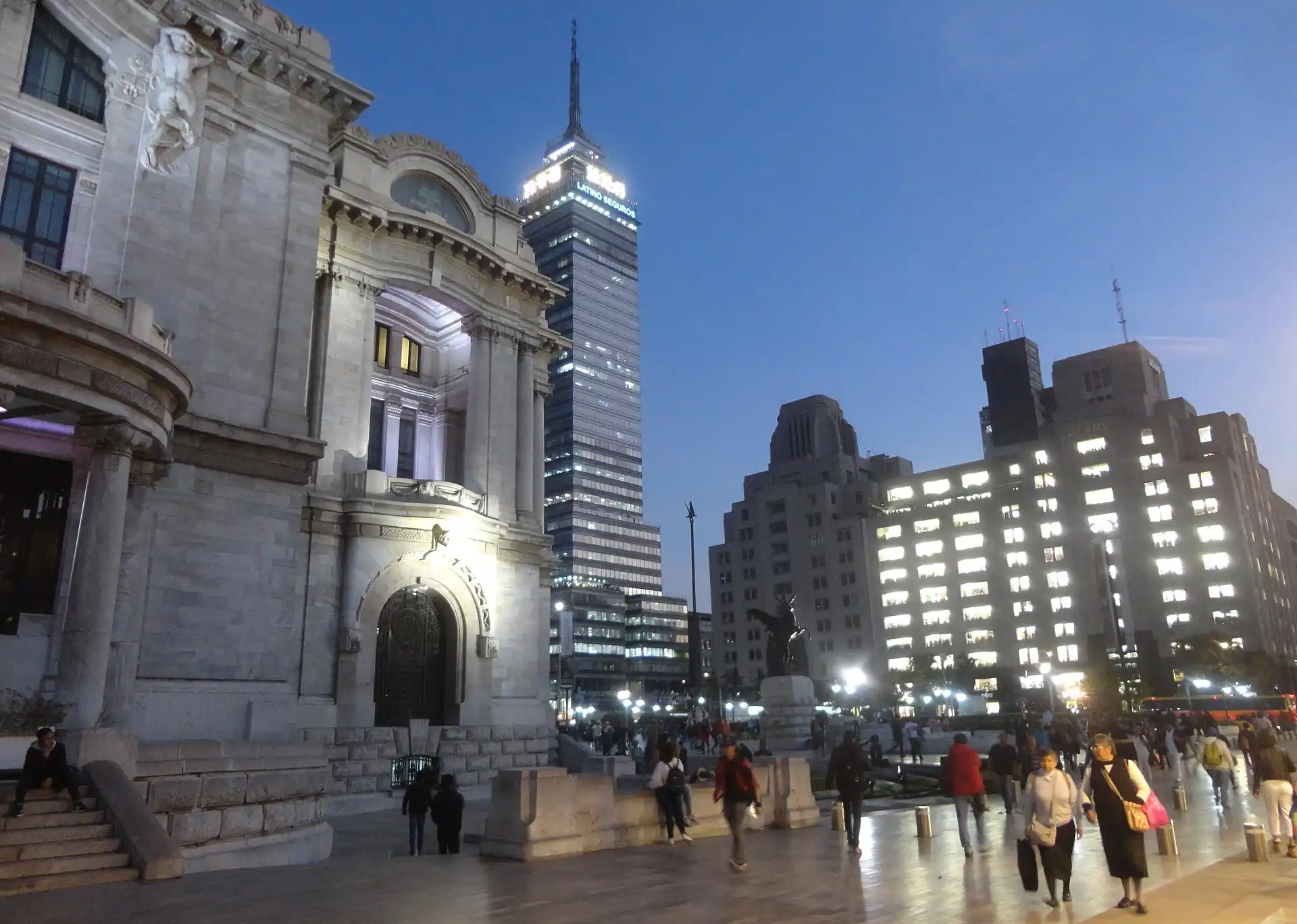
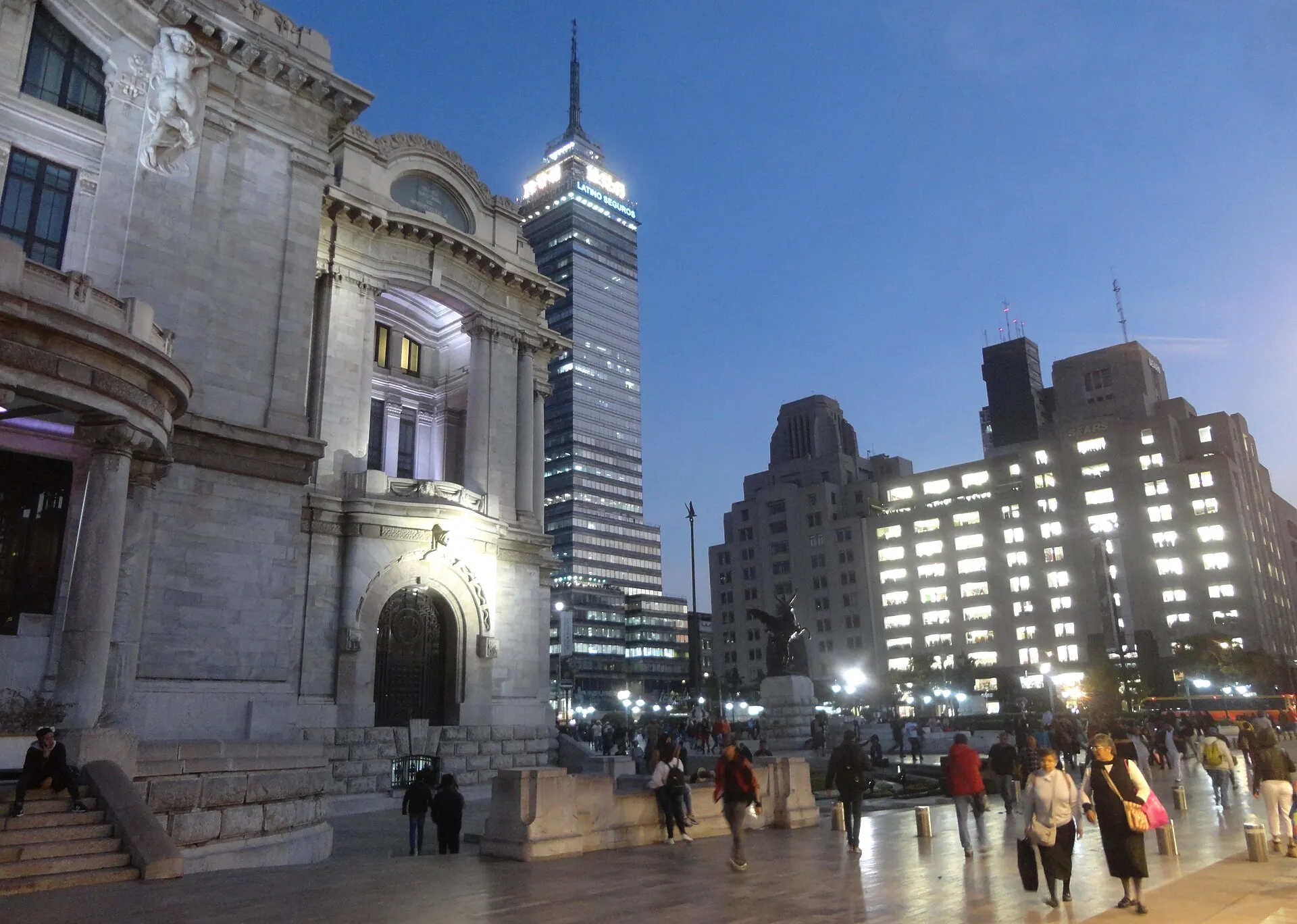
- Palacio de Bellas Artes: The white marble palace with the orange domes was started by Adamo Boari in 1904, stopped by the Revolution, and finished by Federico Mariscal in 1934. The outside is Art Nouveau and the inside is Art Deco. Upstairs are murals by Rivera, Orozco, Siqueiros and Tamayo, including Rivera’s Man, Controller of the Universe.
- Torre Latinoamericana: When it opened on 30 April 1956, this was the tallest building in Mexico, and it kept that title until 1982. It came through the 1985 earthquake without damage while buildings around it fell. The observation deck on the 44th floor looks straight down on Bellas Artes and the Alameda, and on a clear day you can see the volcanoes.
- Calle Madero and the Casa de los Azulejos: Calle Madero is the pedestrian street that links the Zócalo with the Alameda, lined with churches, old mansions and shops. Halfway along is the Casa de los Azulejos, the House of Tiles, an 18th-century palace covered on three sides with blue and white Talavera tiles from Puebla. It’s been a Sanborns restaurant for a long time, so you can walk in for breakfast.
- The Zócalo (Plaza de la Constitución): The main square of the city, and of the Aztec capital before it. Its formal name is Plaza de la Constitución, but everyone says the Zócalo. In the middle is a flagpole with an enormous Mexican flag that soldiers raise and lower each day and carry into the National Palace. Concerts, protests and festivals all happen here.
- Metropolitan Cathedral: The biggest church in the city, built in sections from 1573 to 1813, so you can see Renaissance, Baroque and Neoclassical styles side by side. It stands on soft old lake bed and has been sinking unevenly for centuries; look along the floor and you’ll notice it isn’t level. It also has two of the largest 18th-century organs in the Americas.
- Templo Mayor: This was the main temple of Tenochtitlan. It was buried for centuries under the colonial city until 21 February 1978, when electricity workers digging here found a huge stone disc showing the moon goddess Coyolxauhqui. Excavations followed, and now you walk on platforms over the ruins, then through a museum full of what was found.
- National Palace (Palacio Nacional): The long red building along the Zócalo is the seat of the federal government. Inside, Diego Rivera painted the main stairwell and the walls of the upper floor between 1929 and 1935. The cycle is called The Epic of the Mexican People, and the stairwell mural alone covers about 450 square metres, from Aztec times to 1930.
- Best time to go
- November to April is the dry season, with sunny days and cool evenings. From about June to September, expect heavy afternoon rain.
- From the airport
- Metrobús Line 4 runs from both MEX terminals to the centre for $30 MXN, paid with a Mobility Integrated (MI) card or a contactless bank card (official CDMX tourism site, checked 11 November 2026). Otherwise use an authorised airport taxi booth inside the terminal or a ride-hailing app.
Mexico travel FAQ
How many days do I need in Mexico City?
Three days covers the historic centre, Chapultepec and Coyoacán. Add a day for Teotihuacán and another if you want to eat your way through Roma and Condesa.
What currency does Mexico use?
The Mexican peso (MXN). Prices use the $ sign, so check whether a price is in pesos or US dollars. Pay in pesos when a card machine offers a choice.
Which plugs does Mexico use?
Type A and B, 127 V, the same as the US and Canada. Visitors from Europe and the UK need an adapter.
Do you tip in Mexico?
Yes. Around 10–15% is normal in restaurants, and it’s common to tip guides, hotel staff and the people who pack your shopping.
Travelling to Mexico?
Heads-up: this page contains affiliate links. If you book or buy through them we may earn a small commission at no extra cost to you. It never changes our picks. How we make money.